
Duration
7 Days
Activity
Trekking
best season
March-May/Nov-Dec
Accommodation
Teahouse/Lodge
Destination
Annapurna Region
New Offers !!! 2026 New Booking open With 10% Discount

 iconic summary
from0Reviews
Guides And Language
facility
Value For Money
Service
Location
Overviews
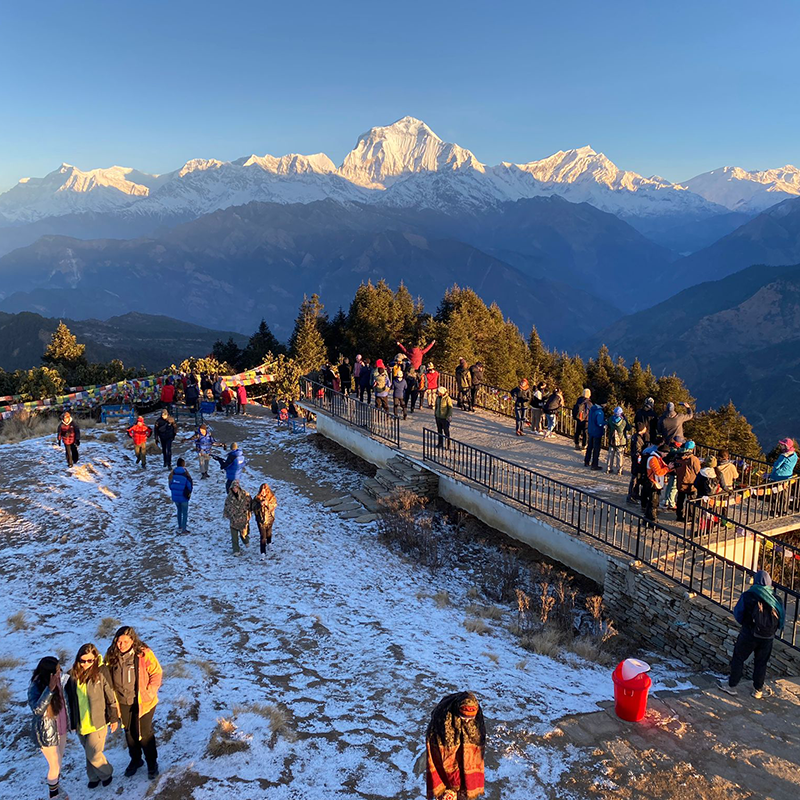
The Poon Hill Trek is a moderate trek in the Annapurna region of Nepal that offers stunning views of the Himalayan peaks, including Annapurna South, Machhapuchhre (Fishtail), and Dhaulagiri. The highlight of the trek is the sunrise view from Poon Hill, which is located at an altitude of 3,210 meters (10,531 feet). The sunrise is truly magical, as the first rays of light illuminate the snow-capped peaks against the backdrop of a clear blue sky. The view is so breathtaking that it has been called one of the best in the world.
In addition to the stunning scenery, the Poon Hill Trek also offers the opportunity to experience Nepali culture. The trail passes through several villages, where you can meet local people and learn about their way of life. You can also sample delicious Nepali food and try your hand at some traditional activities, such as trekking through rice paddies or visiting a local temple.
The Poon Hill Trek is a great way to experience the best of what Nepal has to offer. It's a challenging but rewarding trek that will leave you with memories that will last a lifetime.
Here are some of the things you can expect on the Poon Hill Trek:
- Stunning views of the Annapurna and Dhaulagiri ranges.
- A challenging but rewarding trek.
- The opportunity to experience Nepali culture.
- Delicious Nepali food.
- Traditional activities such as trekking through rice paddies or visiting a local temple.
- A magical sunrise view from Poon Hill.
If you're looking for a challenging but rewarding trek that will offer you stunning views, the Poon Hill Trek is a great option. It's a trek that you'll never forget.
Highlights:
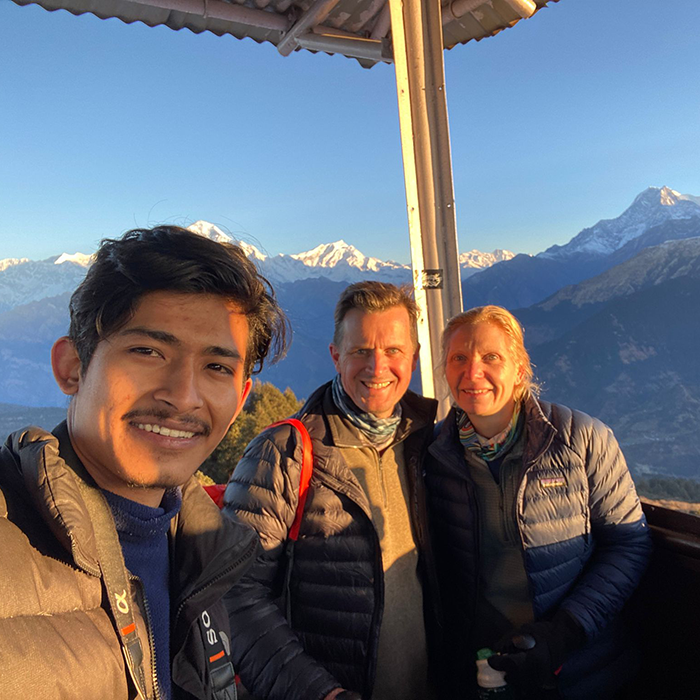
Panoramic Sunrise Views: The sunrise view from Poon Hill is the trek's most iconic highlight. As the sun rises over the Annapurna and Dhaulagiri mountain ranges, the sky transforms into a canvas of vibrant hues, illuminating the majestic peaks. Trekkers are treated to a surreal spectacle that leaves an indelible mark on their memories.
Cultural Immersion: The trek takes you through charming Gurung and Magar villages, providing an opportunity to immerse yourself in the local culture. Interactions with the hospitable villagers offer insights into their traditional lifestyles, customs, and warm hospitality. The experience is enriched by visiting monasteries and observing the locals' daily routines.
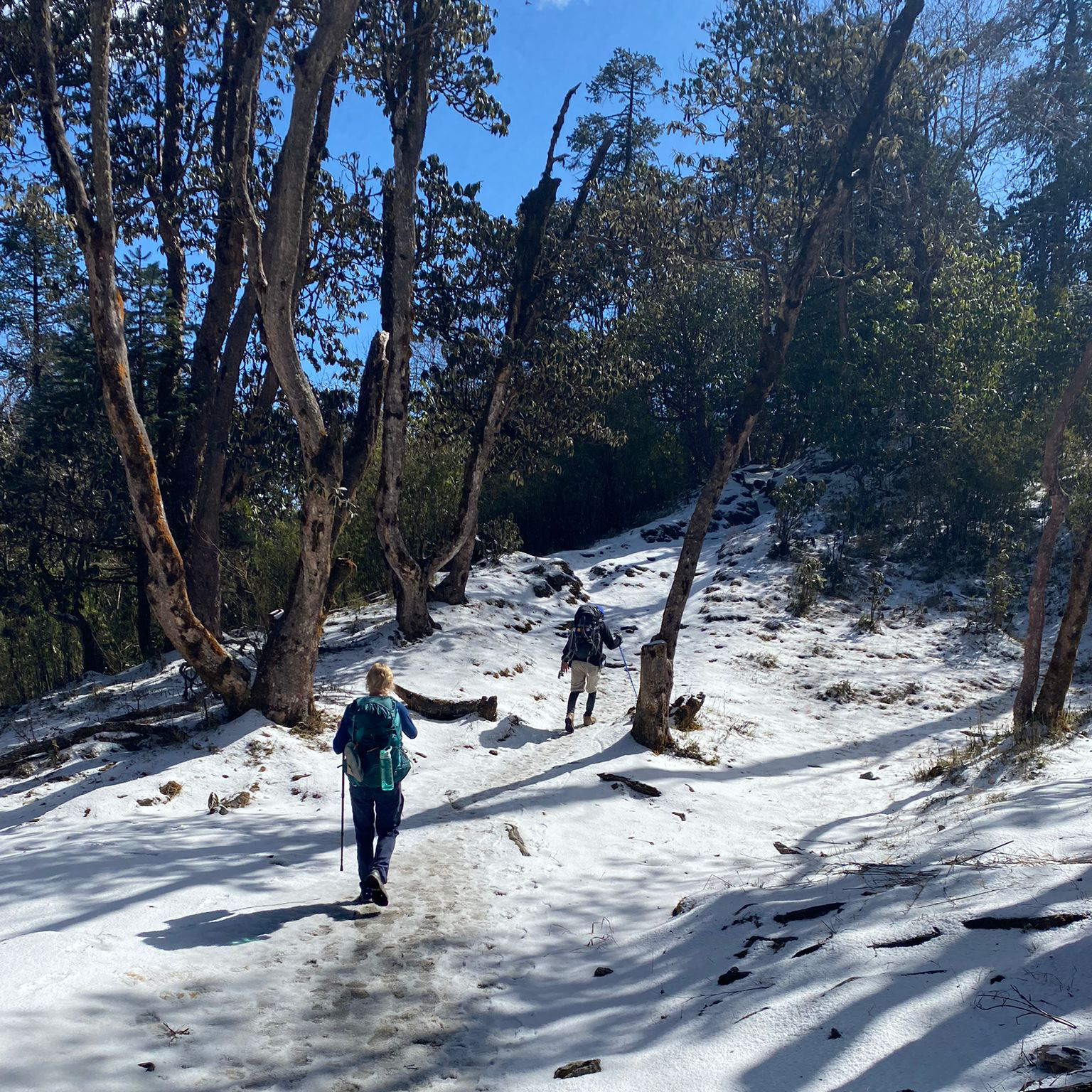
Varied Landscapes: The diversity of landscapes encountered on the trek adds to its allure. The trail traverses terraced fields, lush rhododendron forests, and serene alpine meadows. The ever-changing scenery ensures that each day's walk presents a new and captivating backdrop.
Photographic Opportunities: The Poon Hill Trek is a paradise for photographers. From the panoramic mountain views to the quaint villages and colorful rhododendron blooms, every step of the journey offers opportunities to capture stunning photographs that encapsulate the trek's beauty.
Easy Accessibility: The trek's accessibility is a major highlight. Starting from Nayapul, a short drive from Pokhara, the trail is easily reachable, making it an ideal choice for trekkers with limited time. The relatively gentle ascent also makes it suitable for trekkers of various fitness levels, including beginners.
Ghorepani Village: The trek takes you to the charming village of Ghorepani, a popular stop along the trail. This traditional settlement offers a taste of local life, with its stone-paved paths, terraced fields, and welcoming tea houses. Ghorepani serves as a resting point before the early morning hike to Poon Hill for sunrise.
Hot Springs at Jhinu Danda: On the way back from Poon Hill, you have the option to detour to Jhinu Danda. Here, you can relax and rejuvenate your muscles in natural hot springs, offering a soothing contrast to the trek's physical demands.
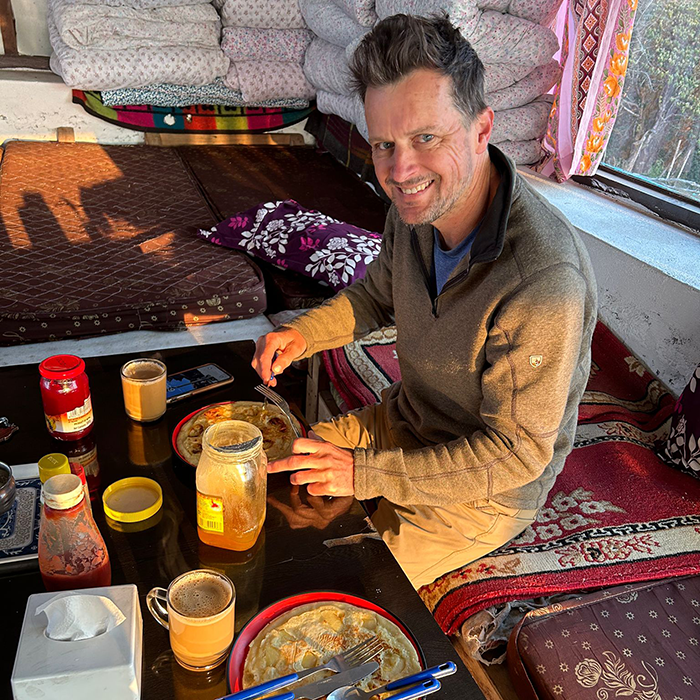
Culinary Delights: The trek introduces you to the flavors of Nepali cuisine. Enjoy hearty meals in tea houses that offer local dishes such as dal bhat (rice and lentil stew), momo (dumplings), and traditional beverages. These culinary experiences add a cultural dimension to the journey.
Interaction with Trekkers: The Poon Hill Trek is a popular route, drawing trekkers from around the world. This provides an opportunity to meet and connect with fellow adventurers from diverse backgrounds. Sharing stories and experiences with other trekkers can enhance the sense of camaraderie along the trail.Rhododendron Blooms: If you trek during the spring season (March to April), the rhododendron forests come alive with colorful blooms. The vibrant shades of red, pink, and white create a magical atmosphere, making the trek even more enchanting.
Stunning Sunsets: While sunrise from Poon Hill is famous, the region also offers spectacular sunsets. The changing hues over the Annapurna and Dhaulagiri ranges create a serene and captivating evening panorama that is equally memorable.
Ethnic Diversity: The trail exposes you to the cultural diversity of the region. From the Gurung and Magar communities to the interactions with the indigenous people, you gain a deeper appreciation for the intricate tapestry of Nepal's ethnic groups.
Personal Achievement: The sense of accomplishment upon reaching Poon Hill's summit and witnessing the breathtaking sunrise can be a powerful and rewarding experience. It offers a taste of mountaineering achievement without the demands of a longer trek.
Here are some notable subpeaks:
Tadapani Viewpoint: Tadapani, a village on the trek route, offers a lesser-known viewpoint that presents captivating vistas of the surrounding mountains. The sunrise and sunset views from Tadapani provide a serene and intimate alternative to the more crowded Poon Hill.
Dhampus: While not a direct part of the Poon Hill Trek, Dhampus is a nearby village that can be included in an extended itinerary. The Dhampus viewpoint offers splendid views of the Annapurna and Machapuchare ranges, making it a worthwhile detour.
Ghorepani Hill: This is a hill situated near the village of Ghorepani. While it's not as famous as Poon Hill, it provides a quieter and less crowded sunrise view, allowing trekkers to soak in the beauty of the mountains in a more peaceful setting.
Poon Hill Alternative Route: Some trekking companies offer an alternative route to Poon Hill that leads to a different viewpoint. This allows trekkers to enjoy a distinct perspective of the Annapurna and Dhaulagiri ranges while avoiding the larger crowds on the main Poon Hill route.
Banthanti Hill: On the way to Ghorepani, trekkers pass through Banthanti, where a short hike uphill offers panoramic views of the surrounding landscapes and peaks.
The main trekking route destination for the Poon Hill Trek is the Poon Hill viewpoint itself, which is situated at an altitude of 3,210 meters (10,531 feet) in the Annapurna region of Nepal. This iconic viewpoint offers spectacular panoramic views of the Annapurna and Dhaulagiri Mountain ranges, including prominent peaks like Annapurna South, Machapuchare (Fishtail), and Dhaulagiri.
The trek typically starts from Nayapul or Tikhedhunga, depending on the chosen route, and passes through charming villages like Ghorepani and Tadapani. The ultimate goal of the trek is to reach Poon Hill early in the morning to witness the awe-inspiring sunrise over the Himalayas. The panoramic vistas from this vantage point provide trekkers with a profound sense of awe and a close encounter with some of the world's highest peaks.
While Poon Hill is the primary destination, the trek itself is filled with captivating subpeaks, cultural encounters, and natural wonders. The journey through terraced fields, lush forests, and quaint villages showcases the diverse landscapes of the Annapurna region, making it a well-rounded and enriching experience.
Here are some trek facts for the Poon Hill Trek:
Distance: The total distance of the Poon Hill Trek is about 40 kilometers (25 miles).
Altitude: The highest point on the trek is Poon Hill, which is located at an altitude of 3,210 meters (10,531 feet).
Permits: You will need to obtain a TIMS card and an Annapurna Conservation Area Permit before you can start the Poon Hill Trek. These permits can be obtained in Kathmandu or Pokhara.
Guide and porters: It is recommended that you hire a guide and porters for the Poon Hill Trek. This will help to ensure your safety and make the trek more enjoyable.
Accommodation: There are tea houses along the trail where you can stay overnight. These teahouses are basic but comfortable, and they offer delicious Nepali food.
Weather: The best time to do the Poon Hill Trek is during the spring (March-May) or autumn (September-November). The weather is usually mild and sunny during these times.
Cost: The cost of the Poon Hill Trek will vary depending on the length of your trek, the level of accommodation you choose, and the number of people in your group. However, you can expect to pay around $500-700 USD for a 4-5 day trek.
The history of the Poon Hill Trek is not well-documented, but it is believed that the trail has been used for centuries by local people to travel between the villages in the Annapurna region. The first Western trekkers to visit Poon Hill were a group of British climbers in the 1960s. They were impressed by the stunning views from Poon Hill and soon word spread about this amazing place.
In the 1970s, the Poon Hill Trek became increasingly popular with trekkers from all over the world. The trail was improved and tea houses were built along the way, making it easier and more comfortable for trekkers to do the trek. Today, the Poon Hill Trek is one of the most popular treks in Nepal and it offers stunning views of the Annapurna and Dhaulagiri ranges.
Here are some of the notable events in the history of the Poon Hill Trek:
1960s: The first Western trekkers visit Poon Hill.
1970s: The Poon Hill Trek becomes increasingly popular with trekkers from all over the world.
1980s: Teahouses are built along the trail, making it easier and more comfortable for trekkers to do the trek.
1990s: The Poon Hill Trek becomes one of the most popular treks in Nepal.
2000s: The Poon Hill Trek continues to grow in popularity, with trekkers from all over the world coming to experience the stunning views and the unique culture of the Annapurna region.
The Poon Hill Trek is a popular trek for a reason. It is a challenging but rewarding trek that offers stunning views of the Himalayas. It is also a great way to experience Nepali culture and to learn about the history of the Annapurna region. If you are looking for an unforgettable trekking experience, the Poon Hill Trek is a great option.
Enjoying the Poon Hill Trek is an immersive experience that intertwines breathtaking landscapes, cultural immersion, and personal achievement. The journey begins with the anticipation of witnessing the sunrise from Poon Hill's summit, a moment that rewards you with the mesmerizing panorama of the Annapurna and Dhaulagiri ranges illuminated by the first rays of dawn. Yet, the enjoyment extends beyond the iconic viewpoint, encompassing interactions with warmhearted locals in charming villages, the tranquility of lush forests, and the ever-changing beauty of the Himalayan landscapes. The trek's accessibility and relatively short duration make it accessible to a wide range of trekkers, allowing you to savor each step without excessive physical strain. Ultimately, the pleasure of the Poon Hill Trek lies in the harmony of natural wonders and cultural experiences, leaving you with a sense of wonder and connection that lingers long after the journey's end.
Trekking to Poon Hill is an enchanting journey that beckons trekkers for a myriad of reasons. The allure lies in the unparalleled sunrise view from Poon Hill's summit, where the spectacle of Annapurna and Dhaulagiri peaks bathed in the soft hues of dawn is nothing short of mesmerizing. Beyond the panoramic vistas, the trek offers a window into the cultural tapestry of Nepal, as you traverse through Gurung and Magar villages, immersing yourself in their warm hospitality and age-old traditions. The ease of accessibility, diverse landscapes ranging from terraced fields to rhododendron forests, and the sense of accomplishment upon reaching the summit all contribute to the trek's appeal. In the embrace of the Himalayas, the Poon Hill Trek is not merely a physical journey but a soul-enriching adventure that leaves an indelible mark on your heart and memories.
Embarking on the Poon Hill Trek involves a well-structured approach that ensures a safe and enjoyable journey through Nepal's Annapurna region. Begin by choosing the optimal time for your trek, typically during the spring (March to April) or autumn (September to November) seasons, when the weather is favorable and the views are clear. Secure the necessary permits, including the Annapurna Conservation Area Permit (ACAP) and the TIMS (Trekkers' Information Management System) card. Next, arrange transportation to the trek's starting point, usually Nayapul or Tikhedhunga, from the bustling city of Pokhara.
Decide whether to trek independently or with a guided group. Hiring a local guide can enhance your experience by providing insights into local culture, navigating the route, and ensuring safety. Teahouse accommodations are available along the trail, offering a range of options for lodging and meals. The trekking route typically passes through villages like Ghorepani and Tadapani before culminating at the Poon Hill viewpoint. The ascent to Poon Hill is usually undertaken early in the morning to witness the breathtaking sunrise.
Proper packing, including suitable clothing, trekking gear, and essentials, is crucial for a comfortable trek. Staying hydrated, maintaining a steady pace, and allowing time for acclimatization contribute to a successful trekking experience. By planning meticulously, understanding the route, and being prepared for the trek's challenges, you can ensure a rewarding journey to the captivating Poon Hill viewpoint.
Expert Guides: We provide experienced and knowledgeable local guides can significantly enhance the trek. Guides can share insights about the region's culture, history, flora, and fauna, enriching trekkers' understanding of the surroundings.
Customized Itineraries: We offer flexible itineraries that cater to trekkers' preferences, fitness levels, and time constraints can ensure a more tailored and effective experience. This includes options for acclimatization days, side trips, and variations in routes.
Proper Acclimatization: Our company incorporates acclimatization days into the itinerary, allowing trekkers to adapt to the altitude gradually. This helps prevent altitude-related issues and contributes to a more successful and enjoyable trek.
Quality Accommodations: We ensure comfortable and hygienic accommodations in teahouses along the route is crucial. Well-rested trekkers are better equipped to enjoy the journey and achieve their trekking goals.
Healthy Meals: We provide balanced and nutritious meals that cater to different dietary preferences and restrictions that can keep trekkers energized throughout the journey. Hygienic food preparation practices are essential to avoid any health issues.
Safety Measures: We Prioritize safety by hiring trained and certified guides, as well as having a well-stocked first aid kit and communication devices, by ensuring that trekkers are well taken care of during any unexpected situations.
Environmental Conservation: By promoting responsible trekking practices we follow Leave No Trace principles that can help protect the fragile Himalayan ecosystem for future generations.
Porter Support: We offer porter services that can alleviate the physical burden on trekkers, allowing them to fully enjoy the trek without the added strain of carrying heavy loads.
The best time to go on the Poon Hill Trek is during the spring (March-May) or autumn (September-November). The weather is usually mild and sunny during these times, making for perfect trekking conditions.
The monsoon season (June-August) can be wet and humid, making the trek more challenging. The winter season (December-February) can be cold and snowy, making it difficult to reach the higher altitudes.
Here is a more detailed breakdown of the weather conditions in each season:
Spring (March-May): This is the most popular time to go on the Poon Hill Trek. The weather is usually mild and sunny, with average temperatures ranging from 15-25 degrees Celsius. The rhododendrons are in bloom during this time, adding to the beauty of the trek.
Autumn (September-November): The weather is also mild and sunny during this time, with average temperatures ranging from 10-20 degrees Celsius. This is a good time to go on the Poon Hill Trek if you want to avoid the crowds of the spring season.
Monsoon (June-August): The monsoon season can bring heavy rain and fog to the Poon Hill Trek. The trails can be muddy and slippery, and there is a risk of landslides. However, if you are willing to brave the elements, you can still enjoy the trek during this time.
Winter (December-February): The weather can be cold and snowy during the winter season, with average temperatures ranging from 0-10 degrees Celsius. The trails can be icy and slippery, and there is a risk of avalanches. If you are planning to go on the Poon Hill Trek during this time, it is important to be properly prepared for the cold weather and the possibility of adverse weather conditions.
Ultimately, the best time to go on the Poon Hill Trek depends on your personal preferences and what you are looking for in a trekking experience. If you want mild weather and stunning views, the spring or autumn seasons are a good choice. If you are looking for a challenge, the monsoon season can be a good option. And if you are looking for a winter wonderland, the winter season can be a great choice.
The cost of the Poon Hill Trek can vary based on several factors, including your travel style, the duration of the trek, and your personal preferences. Generally, the Poon Hill Trek is considered to be more budget-friendly compared to some of the longer and more remote treks in Nepal. However, it's important to understand the potential costs involved. Here's a rough breakdown:
You'll need to budget for permits, including the Annapurna Conservation Area Permit (ACAP) and the TIMS (Trekkers' Information Management System) card. These permits typically cost around $30 to $40 in total.
Accommodations in tea houses along the route can cost around $10 to $20 per night. Meals may be included or paid separately, with an estimated cost of around $20 to $30 per day for meals and drinks.
Transportation costs include getting to the trek's starting point, usually Nayapul or Tikhedhunga, from Pokhara. The cost of transportation can vary depending on whether you take a private vehicle or use local transportation options.
If you choose to hire a local guide or porter, their services will come at an additional cost. A guide can provide valuable insights and navigate the trail, while a porter can carry your main luggage, making the trek more comfortable.
If you don't have your own trekking gear, you may need to budget for renting or purchasing items like trekking poles, sleeping bags, and down jackets.
Miscellaneous Expenses: Budget for expenses like snacks, souvenirs, tips for guides and porters, and any unforeseen costs.
The Poon Hill Trek is a moderate trek in the Annapurna region of Nepal that offers stunning views of the Himalayas, cultural immersion, and personal fulfillment. The journey is a perfect choice for trekkers of all levels, as it is not too challenging and can be completed in just 4-5 days.
The highlight of the trek is the sunrise view from Poon Hill, which is located at an altitude of 3,210 meters (10,531 feet). The sunrise is truly magical, as the first rays of light illuminate the snow-capped peaks of Annapurna and Dhaulagiri against the backdrop of a clear blue sky.
In addition to the stunning scenery, the Poon Hill Trek also offers the opportunity to experience Nepali culture. The trail passes through several villages, where you can meet local people and learn about their way of life. You can also sample delicious Nepali food and try your hand at some traditional activities, such as trekking through rice paddies or visiting a local temple.
The Poon Hill Trek is a great way to experience the best of what Nepal has to offer. It is a challenging but rewarding trek that will leave you with memories that will last a lifetime.If you're looking for a challenging but rewarding trek that will offer you stunning views, the Poon Hill Trek is a great option. It's a trek that you'll never forget.
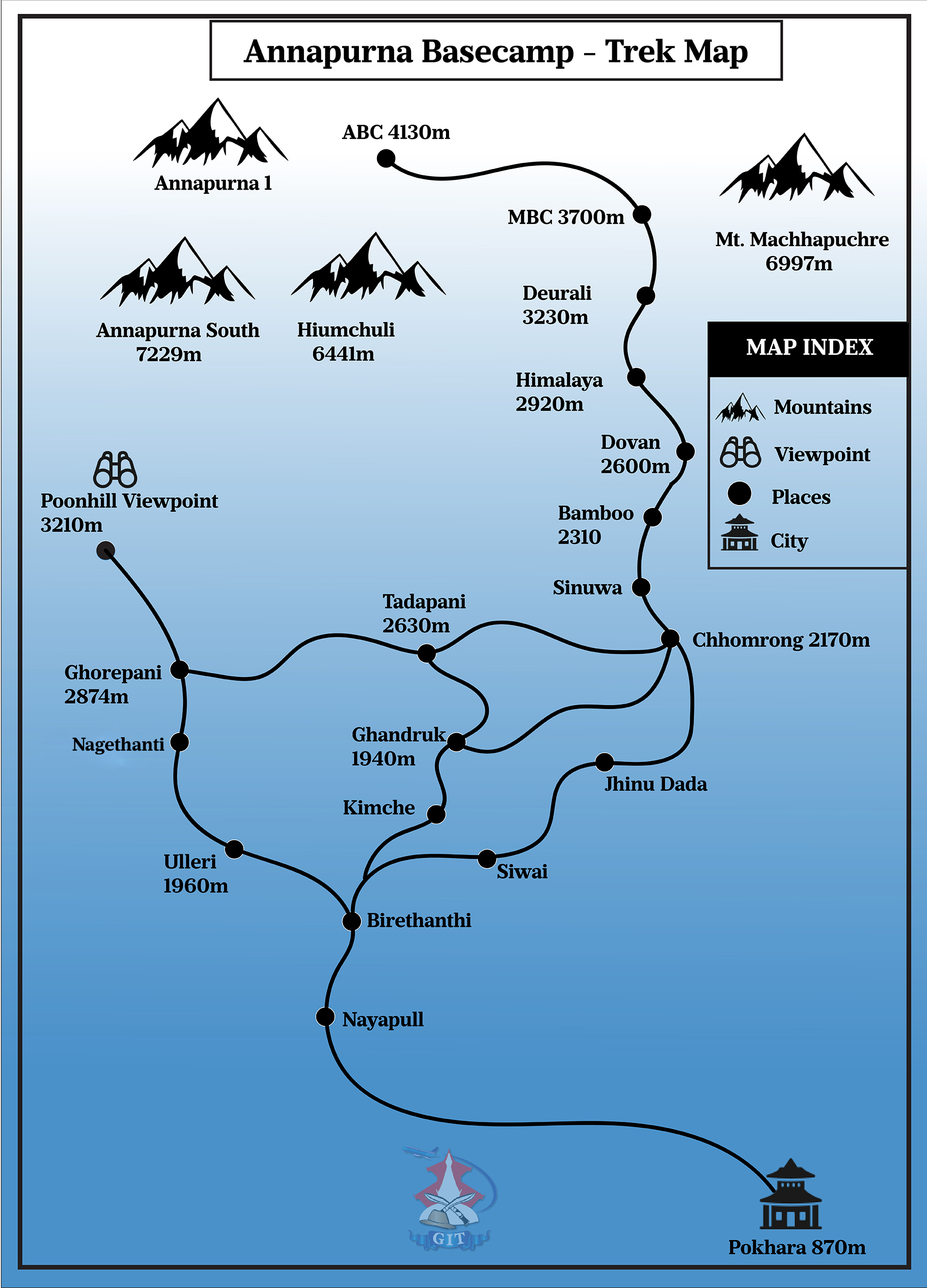
route map for Poon Hill Trek 7 Days
 Itinerary
We start off early, but with time for breakfast first. The road out of the Kathmandu Valley twists its way down the valley wall until it joins the Trushuli River below. Here we see rafters braving the white water – perhaps this is your future trip in the planning – and can see snow-capped mountains in the distance.
Once we reach flatter land, we stop for lunch before heading on to the lake city of Pokhara. After checking into the hotel, there is time to explore the neighbourhood: the walkway along the lake, the varied and interesting shops and restaurants, and of course, the mesmerising Fishtail Mountain towering over the city.
Please note that we use comfortable tourist buses on this route, but if you would like to hire your own personal car or flight. Please, Mention it.
After breakfast in the Hotel, it’s a relatively short drive to Tikhedhunga via Nayapul. Your journey begins with an early morning drive from Pokhara to Nayapul, the starting point of your trek. The scenic drive takes about 1.5 hours, offering picturesque views of the lush countryside and distant peaks. From Nayapul, you'll start your trek towards Tikhedhunga, crossing suspension bridges over rushing rivers and passing through charming villages. The trail gradually ascends, leading you through terraced fields and forests. Upon reaching Tikhedhunga, you’ll face the challenge of Ulleri's famed stone steps—a steep ascent of over 3,000 steps. Though demanding, the climb rewards you with stunning vistas and the warm hospitality of Ulleri village, where you’ll rest for the night.
Above Ulleri and coming out of the forest, the trail becomes more gentle, crossing pastures and fields. On day 3, your journey that takes you deeper into the heart of the Annapurna region. The trail starts with a steady climb through a dense rhododendron forest, which bursts into a riot of color during spring. As you trek, you’ll pass through quaint villages like Banthanti and Nangethanti, where you can take short breaks and enjoy the serene surroundings. The path offers glimpses of the snow-capped peaks, motivating you as you approach Ghorepani. By late afternoon, you’ll arrive in Ghorepani, a charming mountain village perched at 2,850 meters, where you’ll rest and prepare for the early morning hike to Poon Hill.
Day 4 begins with an early pre-dawn hike to Poon Hill, the highlight of the trek. As you ascend in the crisp morning air, anticipation builds for the stunning sunrise that awaits. Upon reaching the summit at 3,210 meters, you’ll be rewarded with a panoramic view of the Himalayas, where the golden rays of the rising sun illuminate peaks like Annapurna, Dhaulagiri, and Machhapuchhre. After soaking in this unforgettable vista, you’ll descend back to Ghorepani for breakfast. From there, the trek continues towards Tadapani, winding through lush forests of rhododendron and oak, with occasional mountain views peeking through the trees. By late afternoon, you’ll arrive in Tadapani, a peaceful village surrounded by dense forest, where you’ll rest for the night.
On the fifth day, your trek takes you from Tadapani to the charming village of Ghandruk. The trail descends gradually through a dense forest of rhododendron and oak, offering serene surroundings and the occasional sighting of local wildlife. As you walk, you’ll be treated to stunning views of Annapurna South, Hiunchuli, and Machhapuchhre, making for an enjoyable and scenic journey. After a few hours, you’ll reach Ghandruk, one of the largest Gurung villages in the region. This traditional village is known for its rich culture and well-preserved heritage. Spend the afternoon exploring the stone-paved streets, visiting the Gurung Museum, and enjoying the hospitality of the local people. The overnight stay in Ghandruk offers a perfect blend of natural beauty and cultural immersion.
Conclude your Poonhill adventure with a scenic drive back to Kathmandu. You’ll bid farewell to the serene beauty of Pokhara and begin your journey back to Kathmandu. After breakfast, you’ll either take a scenic flight or embark on a drive through the picturesque countryside. The flight offers breathtaking aerial views of the Himalayas, while the drive takes you through lush hills, terraced fields, and charming villages, allowing you to soak in the last of Nepal’s rural landscapes. Upon arrival in Kathmandu, you’ll have the rest of the day to relax, explore the city’s vibrant streets, or visit any remaining cultural landmarks. This final day is a chance to reflect on your incredible Poon Hill trek and enjoy the comforts of Nepal’s bustling capital.
Cost Include
Cost Exclude
gallery and videos
 Additional Information
freqeuntly asked question
enquiry for further inforamtion
package reviews and rating
write reviews
 Group Join Discount
| Nos Of Persons | price per person |
|---|---|
| 1 persons | US$ 699 |
| 2 persons | US$ 664 |
| 3-5 persons | US$ 650 |
| 6-9 persons | US$ 629 |
| 10-15 persons | US$ 615 |
| 16+ persons | US$ 594 |
upcomming fixed departure
| Trip | Departure Date | Price | Trip Status | Action |
|---|---|---|---|---|
| 1. Poon Hill Trek 7 Days | 2026-03-25, 7days | US$ 700 |
UpComming Fixed Departure
offered features

Selling Expedition


showing varified reviews