
Duration
21 Days
Activity
Trekking
best season
March-May/Nov-Dec
Accommodation
Teahouse/Lodge
Destination
Manaslu Region
New Offers !!! 2026 New Booking open With 10% Discount

 iconic summary
from4Reviews
Guides And Language
facility
Value For Money
Service
Location
Overviews
The Manaslu Circuit with Tsum Valley Trek is a mesmerizing adventure that combines the allure of the Himalayas with cultural immersion in Nepal's remote landscapes. Over the course of approximately 18 to 22 days, trekkers are treated to a multi-faceted experience that encompasses awe-inspiring scenery, encounters with ancient traditions, and the thrill of conquering challenging mountain passes. This trek is a true delight for nature enthusiasts, offering unparalleled views of majestic snow-clad peaks, verdant valleys, and unspoiled forests. The towering presence of Manaslu, the world's eighth-highest mountain, commands attention throughout the journey. Additionally, the opportunity to navigate through diverse terrains – from terraced fields to alpine meadows – adds depth to the trekking experience.
Cultural exploration is a cornerstone of this trek. As trekkers traverse through ethnic villages, they engage with local communities, gaining insights into the customs and lifestyle of the residents. The enchanting Tsum Valley, often hailed as a hidden gem, provides an opportunity to discover the unique heritage of the Tsumba people. Monasteries, chortens, and ancient relics dot the landscape, offering a glimpse into the spiritual essence of the region. The trek's challenges, including crossing the formidable Larkya La Pass, heighten the sense of accomplishment as trekkers overcome steep ascents, descents, and high altitudes. It's essential to be well-prepared physically and mentally. Timing is crucial, with the best seasons for the trek being spring and autumn, when the weather is relatively stable and the views are at their most breathtaking.
In summary, the Manaslu Circuit with Tsum Valley Trek is a unique blend of natural beauty, cultural immersion, and physical achievement. With its remote allure, this trek caters to those who seek an off-the-beaten-path adventure amidst the grandeur of the Himalayas, all while forging connections with the rich tapestry of Nepal's local traditions. Keep in mind that trekking conditions and details can evolve, so consulting local experts or recent sources before embarking is advisable for the most accurate and up-to-date information.
Spectacular Mountain Views: The trek offers breathtaking vistas of towering Himalayan peaks, including the majestic Manaslu, the eighth highest mountain in the world. The panoramic views of snow-capped summits, dramatic landscapes, and glacial valleys create a visual feast for trekkers.
Cultural Immersion in Tsum Valley: Tsum Valley is a hidden gem that beckons with its ancient monasteries, chortens, and unique Tibetan-influenced culture. Trekkers can explore the rich history and traditions of the Tsumba people, interacting with locals and witnessing their spiritual way of life.
Crossing Larkya La Pass: The challenging Larkya La Pass at 5,160 meters (16,930 feet) is a thrilling highlight of the trek. This high-altitude pass offers a sense of achievement and rewards trekkers with mesmerizing panoramic views of the surrounding peaks and landscapes.
Diverse Landscapes: From subtropical forests and terraced fields to alpine meadows and glacial moraines, the trek takes you through a diverse range of landscapes. This ever-changing scenery keeps the journey exciting and constantly reveals new natural wonders.
Off-the-Beaten-Path Experience: Compared to some of Nepal's more popular treks, the Manaslu Circuit with Tsum Valley offers a more remote and less crowded experience. This enhances the sense of adventure, tranquility, and connection with both nature and local cultures.
Enchanting Monasteries: Along the trek, you'll encounter ancient monasteries and gompas that are deeply embedded in the local culture and spirituality. These architectural wonders not only offer insights into Buddhist traditions but also provide serene spots for trekkers to reflect and rejuvenate.
Warm Hospitality: The villages along the trekking route exude warmth and hospitality. Interacting with the local Gurung and Tsumba communities gives you a firsthand experience of their traditions, daily life, and the opportunity to savor local cuisine.
Wildlife Encounters: The Manaslu Conservation Area, through which the trek passes, is home to diverse flora and fauna. Keep an eye out for rare species like the elusive snow leopard, Himalayan tahr, and various species of pheasants and birds.
Tantalizing Hot Springs: After days of trekking, a relaxing soak in natural hot springs near Tatopani can be incredibly rejuvenating. The soothing mineral-rich waters are a delightful way to unwind and soothe tired muscles.
Historical Trading Route: The Manaslu region was historically an important trading route between Nepal and Tibet. This trek follows in the footsteps of traders who traversed these trails, adding a historical and cultural layer to your journey.
Photographer's Paradise: Every corner of this trek offers opportunities for stunning photography. From the ethereal landscapes to vibrant prayer flags against the clear blue sky, trekkers will be spoiled for choice when it comes to capturing unforgettable moments.
Cross-Cultural Encounters: Meeting fellow trekkers from around the world adds an international dimension to the experience. Sharing stories, tips, and camaraderie with people from diverse backgrounds can create lasting memories and friendships.
Intimate Connection with Nature: The trek's remote and less-traveled nature allows you to connect deeply with the environment. The serene surroundings, far from the hustle and bustle of daily life, offer a chance for introspection and mindfulness.
Naike Peak: Naike Peak (6,286 meters / 20,623 feet) is a subpeak of Manaslu and is often considered a "trekking peak." It can be reached as part of a side trip from the Manaslu Circuit Trek. While not as high as the main peak, Naike Peak still offers stunning views and a taste of mountaineering experience.
Ganesh Himal: While not directly on the Manaslu Circuit, the Ganesh Himal range lies to the east of the trekking route. This range includes several subpeaks, each with its own unique character. Trekkers with a passion for exploration might consider side trips to some of these subpeaks, which offer diverse landscapes and breathtaking panoramas.
Tsum Valley Subpeaks: Within the Tsum Valley region, there are several smaller peaks and hills that trekkers can explore for additional vistas. These subpeaks provide a different perspective on the surrounding mountains and valleys and can enhance the overall trekking experience.
Side Peaks on Larkya La Pass: As you ascend the Larkya La Pass, there are several smaller peaks and viewpoints along the way that provide opportunities to take in the grandeur of the Himalayas. These subpeaks offer chances to rest, enjoy the scenery, and capture memorable photographs.
The trekking route of the Manaslu Circuit with Tsum Valley Trek takes you through a diverse and captivating landscape in the Manaslu region of Nepal. Here are the main destinations along the route:
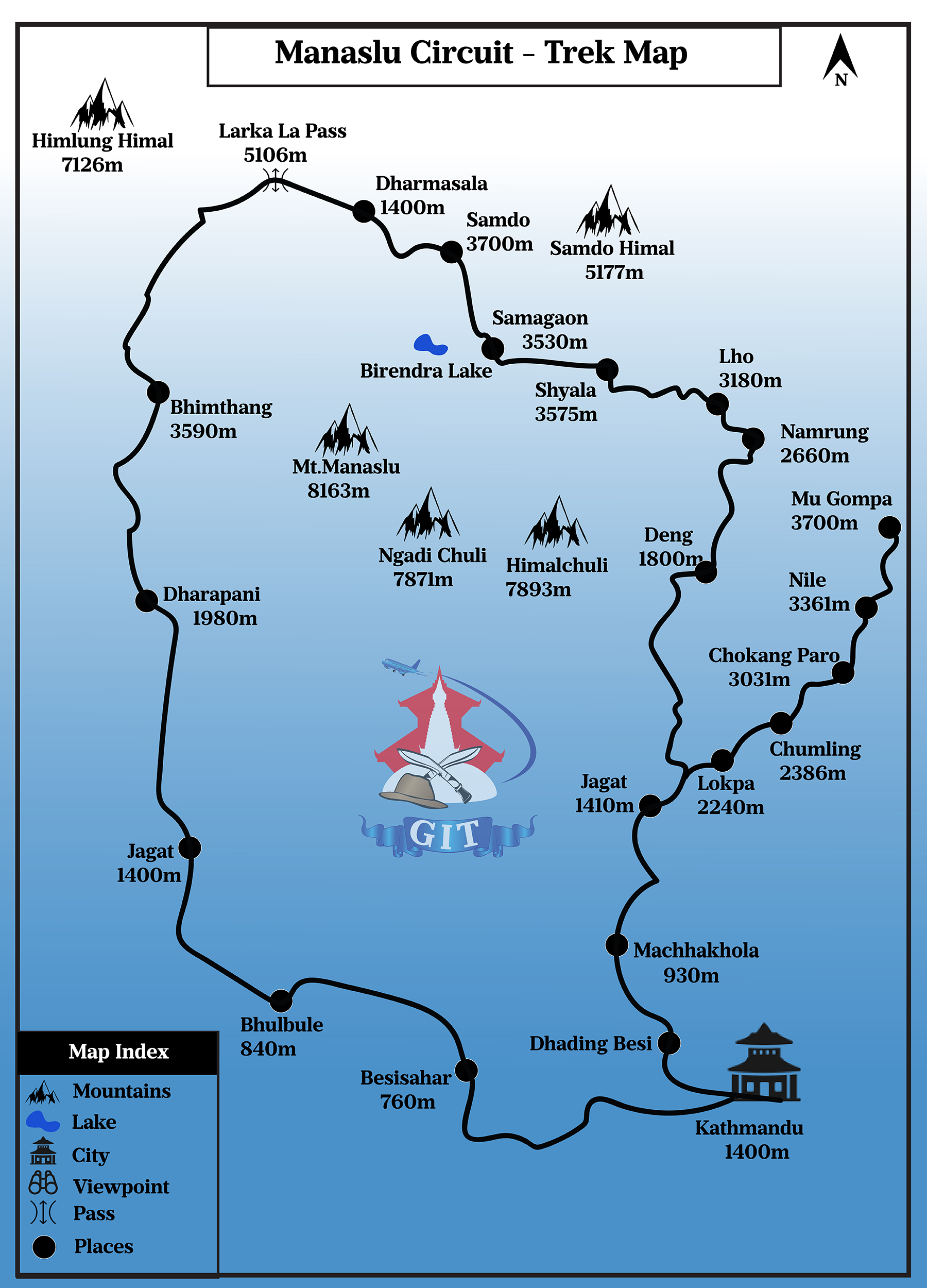
Soti Khola (700 meters / 2,297 feet): The trek usually starts from Soti Khola, a small village situated at a relatively low altitude. From here, you gradually ascend through lush forests and terraced fields, getting your first taste of the trekking adventure.
Machha Khola (930 meters / 3,051 feet): Continuing along the Budhi Gandaki River, you reach Machha Khola. The trail offers glimpses of rural life and traditional settlements.
Jagat (1,340 meters / 4,396 feet): The trail takes you to Jagat, where you enter the Manaslu Conservation Area. The village showcases the region's distinct cultural and architectural features.
Lokpa (2,240 meters / 7,349 feet): After a few days of trekking, you'll arrive at Lokpa, one of the entry points to the Tsum Valley. This is where the cultural exploration of Tsum Valley begins.
Chumling (2,386 meters / 7,828 feet): Chumling is the first village you encounter in Tsum Valley. Here, you can explore local monasteries and immerse yourself in the unique traditions of the Tsumba people.
Chhekampar and Chhule (3,010 meters / 9,875 feet): These twin villages offer insights into the ancient culture of Tsum Valley. The landscape becomes more rugged and the spiritual atmosphere intensifies.
Mu Gompa (3,700 meters / 12,139 feet): Mu Gompa is a major highlight of the trek. This ancient monastery, perched on a hill, is a spiritual hub of the region. The views of the Ganesh Himal range are awe-inspiring.
Birendra Tal (3,450 meters / 11,319 feet): The trail takes you to this beautiful glacial lake, surrounded by mountains. It's a serene spot to rest and soak in the natural beauty.
Samagaun (3,530 meters / 11,581 feet): This traditional Tibetan village is the gateway to Manaslu Base Camp. It's also a great place for acclimatization and exploration.
Manaslu Base Camp (4,800 meters / 15,748 feet): For those who wish to go further, a side trip to Manaslu Base Camp offers the chance to get up close to the towering Manaslu peak.
Larkya La Pass (5,160 meters / 16,930 feet): One of the most challenging sections of the trek, the pass rewards trekkers with breathtaking panoramic views of the Himalayas.
Bimthang (3,720 meters / 12,204 feet): After crossing Larkya La, you'll descend to Bimthang, surrounded by mountains. It's a picturesque spot to rest and reflect.
Dharapani (1,860 meters / 6,102 feet): The trail rejoins the Annapurna Circuit route at Dharapani. From here, you'll trek through more familiar terrain and villages.
Tal (1,700 meters / 5,577 feet): Tal is a charming village with waterfalls and lush landscapes, offering a soothing contrast to the higher altitudes.
Syange (1,100 meters / 3,609 feet): The trek concludes at Syange, where you'll catch transportation back to Kathmandu, marking the end of this remarkable journey.
These destinations, each with its own unique charm, contribute to the rich and unforgettable experience of the Manaslu Circuit with Tsum Valley Trek. As with any trek, it's important to be prepared, take necessary precautions, and respect the local culture and environment along the way.
The Manaslu Circuit with Tsum Valley Trek is a challenging but rewarding trek that takes you through some of the most beautiful and remote parts of Nepal. Here are some facts about the trek:
Duration: The trek typically takes 18-25 days to complete.
Distance: The trek covers a distance of approximately 230 kilometers.
Maximum elevation: The highest point on the trek is Larkya La Pass, which is at an elevation of 5,160 meters (16,929 feet).
Best time to go: The best time to go on the trek is during the spring (March-May) or autumn (September-November).
Difficulty: The trek is considered to be moderately challenging, with some steep ascents and descents.
Accommodation: Trekkers on the Manaslu Circuit with Tsum Valley Trek typically stay in teahouses and lodges.
Highlights: The trek offers stunning views of the Manaslu Himal, Ganesh Himal, and other snow-capped peaks. Trekkers also get to visit the remote Tsum Valley, which is home to several ancient monasteries and villages.
Here are some fun facts about Mount Manaslu, the main attraction of the trek:
The Manaslu Circuit with Tsum Valley Trek is a relatively new trek in Nepal, having only opened to tourists in the early 1990s. The Tsum Valley was previously a restricted area, and the Manaslu Circuit was only accessible to mountaineers.
The first recorded trek through the Manaslu Circuit was in 1956, by a Japanese team that was attempting to climb Manaslu. The team did not summit the mountain, but they did explore the Manaslu Circuit and wrote a report about their journey. In the early 1990s, the Nepalese government opened the Manaslu Circuit to tourists. The first commercial treks to the Manaslu Circuit began in 1993. The Tsum Valley was opened to tourists in 2008.
The Manaslu Circuit with Tsum Valley Trek is now one of the most popular treks in Nepal. The trek offers stunning views of the Manaslu Himal, Ganesh Himal, and other snow-capped peaks. Trekkers also get to visit the remote Tsum Valley, which is home to several ancient monasteries and villages. The trek is considered to be moderately challenging, with some steep ascents and descents. However, it is not as challenging as some other treks in Nepal, such as the Everest Base Camp Trek or the Annapurna Circuit Trek.
The best time to go on the Manaslu Circuit with Tsum Valley Trek is during the spring (March-May) or autumn (September-November). The weather is usually mild during these times, and there are fewer crowds. If you are looking for a challenging but rewarding trek that takes you through some of the most beautiful and remote parts of Nepal, then the Manaslu Circuit with Tsum Valley Trek is a great option.
Enjoying the Manaslu Circuit with Tsum Valley Trek entails embracing the harmonious blend of nature's grandeur and cultural immersion. Each step unveils new wonders, from the serene terraced fields and alpine meadows to the resplendent mountain vistas and spiritual monasteries. The genuine interactions with warm-hearted locals, coupled with the thrill of conquering high passes like Larkya La, elevate the experience. As you traverse the pristine landscapes, capture breathtaking photographs, and savor local flavors, you'll forge an intimate connection with the Himalayas and Nepal's rich heritage, leaving you with lasting memories of an awe-inspiring adventure.
Trekking to the Manaslu Circuit with Tsum Valley isn't just a journey; it's an odyssey that promises a symphony of untamed beauty and cultural revelation. From the soaring Himalayan peaks that grace the skyline to the hidden gems of Tsum Valley's ancient monasteries, the trek paints a canvas of diverse landscapes and transcendent experiences. With each step, you're not only embracing physical challenges but also immersing yourself in the centuries-old traditions of the Tsumba people. This trek isn't just about conquering heights; it's about discovering the depths of nature's artistry and humanity's heritage in a way that's profoundly humbling and incredibly enriching.
To embark on the Manaslu Circuit with Tsum Valley Trek, begin by obtaining the necessary permits, including the Manaslu Conservation Area Permit (MCAP), Annapurna Conservation Area Permit (ACAP), and a restricted area permit for Tsum Valley. Connect with a reputable trekking agency or hire experienced guides and porters who can provide expertise on navigation, cultural insights, and safety. The trek usually starts from Soti Khola, gradually ascending through diverse landscapes, reaching the enchanting Tsum Valley with its monasteries and cultural treasures. Continue through charming villages, cross the challenging Larkya La Pass, and descend to Dharapani, where the trail merges with the Annapurna Circuit. Adequate acclimatization, proper gear, and a respectful approach to local customs will ensure a memorable and fulfilling experience on this remarkable Himalayan adventure.
Expert Guides: We provide experienced and knowledgeable local guides that can significantly enhance the trek. Guides can share insights about the region's culture, history, flora, and fauna, enriching trekkers' understanding of the surroundings.
Customized Itineraries: We offer flexible itineraries that cater to trekkers' preferences, fitness levels, and time constraints can ensure a more tailored and effective experience. This includes options for acclimatization days, side trips, and variations in routes.
Proper Acclimatization: Our company incorporates acclimatization days into the itinerary, allowing trekkers to adapt to the altitude gradually. This helps prevent altitude-related issues and contributes to a more successful and enjoyable trek.
Quality Accommodations: We ensure comfortable and hygienic accommodations in teahouses along the route is crucial. Well-rested trekkers are better equipped to enjoy the journey and achieve their trekking goals.
Healthy Meals: We provide balanced and nutritious meals that cater to different dietary preferences and restrictions that can keep trekkers energized throughout the journey. Hygienic food preparation practices are essential to avoid any health issues.
Safety Measures: We Prioritize safety by hiring trained and certified guides, as well as having a well-stocked first aid kit and communication devices, by ensuring that trekkers are well taken care of during any unexpected situations.
Environmental Conservation: By promoting responsible trekking practices we follow Leave No Trace principles that can help protect the fragile Himalayan ecosystem for future generations.
Porter Support: We offer porter services that can alleviate the physical burden on trekkers, allowing them to fully enjoy the trek without the added strain of carrying heavy loads.
The best time to go on the Manaslu Circuit with Tsum Valley Trek is during the spring (March-May) or autumn (September-November). The weather is usually mild during these times, and there are fewer crowds.
Here is a more detailed overview of the weather conditions in the Manaslu region during each season:
Spring (March-May): The weather is usually mild and sunny during the spring in the Manaslu region. There is a chance of rain, but it is usually light and short-lived. The trails are dry and clear, and the views of the mountains are spectacular. This is the most popular time to go on the Manaslu Circuit with Tsum Valley Trek, so there will be more crowds.
Summer (June-August): The monsoon season in Nepal typically runs from June to September. The Manaslu region receives a lot of rain during this time, and the trails can be muddy and slippery. The views of the mountains are also obscured by clouds. However, if you are looking for a challenging trek with fewer crowds, then the summer may be a good time to go.
Autumn (September-November): The weather is usually clear and sunny during the autumn in the Manaslu region. There is a chance of rain, but it is usually light and short-lived. The trails are dry and clear, and the views of the mountains are spectacular. This is a good time to go on the Manaslu Circuit with Tsum Valley Trek if you want to avoid the crowds.
Winter (December-February): The weather is cold and snowy in the Manaslu region during the winter. The trails can be icy and dangerous, and the views of the mountains are obscured by clouds. However, if you are looking for a true challenge and a chance to see the mountains covered in snow, then the winter may be a good time to go.
Ultimately, the best time to go on the Manaslu Circuit with Tsum Valley Trek depends on your personal preferences and what you are looking for in a trek. If you want mild weather, clear skies, and stunning views, then the spring or autumn are the best times to go. If you are looking for a challenge and fewer crowds, then the summer or winter may be a good option.
Here's a breakdown of potential expenses:
Permits: The permits for the Manaslu Circuit and Tsum Valley can cost around $70 to $90 USD depending on the season and regulations.
Guide and Porter: Hiring a guide and porter is recommended for safety and convenience. A guide can cost around $25 to $35 USD per day, while a porter might cost $20 to $25 USD per day. You can share the costs with other trekkers if you're in a group.
Accommodation and Food: Accommodation and food costs can vary. Basic teahouse accommodations can range from $10 to $30 USD per night, and meals might cost around $15 to $25 USD per day.
Transportation: Transportation to and from the trekking starting and ending points can contribute to the cost. Depending on your location and preferences, this can range from $50 to $150 USD or more.
Equipment and Gear: If you need to rent equipment like sleeping bags, down jackets, and trekking poles, this can add an extra cost of around $20 to $30 USD per item.
Miscellaneous Expenses: Miscellaneous expenses, such as tips for guides and porters, extra snacks, and souvenirs, can add up. Budgeting around $50 to $100 USD for these expenses is a reasonable estimate.
Trekking Agency Fees: If you're going through a trekking agency, their fees for organizing the trek, transportation, permits, and logistics will also be part of the total cost.
The Manaslu Circuit with Tsum Valley Trek stands as a mesmerizing tapestry woven with natural beauty, cultural richness, and adventurous spirit. This remarkable journey unveils the grandeur of the Himalayas, from the awe-inspiring peaks of Manaslu to the tranquil glacial lakes and challenging mountain passes like Larkya La. The cultural immersion within Tsum Valley, where ancient monasteries and the Tsumba way of life reside, adds a profound layer of depth to the experience. As trekkers traverse through diverse landscapes, from terraced fields to alpine meadows, the journey not only offers physical challenge but also a chance for introspection, connection, and personal growth. The Manaslu Circuit with Tsum Valley Trek is an odyssey where breathtaking panoramas, warm hospitality, and the rhythm of nature converge to create indelible memories, leaving trekkers with a deeper appreciation for the mountains and a richer understanding of Nepal's cultural heritage.
route map for Manaslu Circuit with Tsum Valley Trek 21 Days
 Itinerary
Your adventure begins with your arrival in Kathmandu, Nepal's vibrant capital city. You'll be warmly welcomed by our representative. After completing the necessary immigration and customs procedures, we transfer you to your hotel in the heart of the city.
The rest of the day is free for you to rest and acclimate to the time zone and climate. You can explore the vibrant streets of Kathmandu, visit local markets, or relax at your hotel. In the evening, we will have a pre-trek briefing to discuss the itinerary, trek details, and any necessary preparations.
Enjoy a traditional Nepali dinner and get a good night’s rest, preparing for the exciting adventure that awaits in the stunning landscapes of the Manaslu Circuit and Tsum Valley.
After an early breakfast, we depart on a scenic drive towards Machhakhola the starting point of our trek. As we drive, you'll pass through charming villages, lush terraced fields, and dense forests, with breathtaking views of the surrounding mountains and rivers. The route follows the Trishuli River and ascends through the dramatic landscapes of the Ganesh Himal region.
Leaving Machha Khola, we continue our journey along the river, passing through the charming villages of Khorlabesi and Tatopani. The trail offers a mix of gentle ascents and descents. The trek starts with a gentle ascent through terraced fields and forested paths, crossing several suspension bridges over the Machhakhola River. As we continue, we traverse through the scenic Nubri Valley, passing by small settlements and enjoying glimpses of the lush greenery and cascading waterfalls.
We eventually arrive in Jagat, a picturesque village located on the banks of the Budi Gandaki River. Jagat is known for its traditional stone houses and vibrant local culture. Upon arrival, we check into a guesthouse, where you can relax and unwind. In the evening, enjoy a hearty meal and prepare for the next day's journey deeper into the Manaslu region.
As we ascend further into the Manaslu Conservation Area, the landscape begins to change. The trek begins with a gradual ascent through terraced fields and lush forests, crossing several suspension bridges along the way. As we continue, the trail offers views of traditional villages and lush landscapes, with the sound of the river accompanying us.
Upon reaching Lokpa, a small and serene village nestled at the confluence of the Chhekampar and Budi Gandaki rivers, we check into a local guesthouse. Lokpa is a peaceful spot known for its traditional architecture and stunning mountain views. Enjoy a relaxing evening, exploring the village and soaking in the tranquil surroundings before preparing for the next day’s trek.
We continue our exploration of the Tsum Valley region today, trekking through serene forests and passing traditional Tibetan-style villages.
The trail begins with a gradual descent through terraced fields and lush forests, crossing several suspension bridges over the Chhekampar and Budi Gandaki rivers. As we climb steadily, we pass through small villages and encounter local villagers going about their daily routines.
Chumling, located at the confluence of the Chhekampar and the Dumje Khola, is a charming village known for its traditional Tibetan architecture and vibrant local culture. Upon arrival, we check into a guesthouse and have time to explore the village. You can visit the local monasteries, interact with the friendly residents, and enjoy the serene atmosphere of this beautiful area. Relax and prepare for the next day's adventures.
Our journey into the Tsum Valley continues as we trek to Chokhangparo, surrounded by stunning views of the Himalayan peaks. The trail starts with a gentle ascent through lush forests and terraced fields. As we climb, we cross several suspension bridges and navigate rugged paths, with stunning views of the surrounding peaks and valleys. We also pass through traditional Tsum villages, where you can observe local life and Tibetan cultural practices.
Chokhangparo, a picturesque village nestled in the valley, is known for its traditional stone houses and vibrant local culture. Upon arrival, we check into a guesthouse and have time to explore the village and its surroundings. Enjoy the serene environment, interact with the friendly locals, and soak in the tranquility of this beautiful part of the Tsum Valley.
Today, we venture deeper into the Tsum Valley, passing through villages like Lamagaon and Burji. This day marks a significant journey further into the Tsum Valley, where the landscapes become even more dramatic and awe-inspiring.
Our trek takes us to Mu Gompa, a significant religious and cultural center in the Tsum Valley. The trail begins with a gradual ascent through the rugged terrain, offering spectacular views of the surrounding snow-capped peaks and serene landscapes. As we continue, the path meanders through high-altitude pastures and rocky outcrops.
Upon reaching Mu Gompa, we are greeted by the impressive monastery that sits at the edge of the Tibetan Plateau. This ancient monastery, one of the largest in the Tsum Valley, is a center of Tibetan Buddhism and is renowned for its serene atmosphere and beautiful religious artifacts. After settling into our guesthouse, we have the opportunity to explore the monastery, interact with the resident monks, and immerse ourselves in the spiritual ambiance of this high-altitude retreat.
Enjoy a tranquil evening in Mu Gompa, reflecting on the day's journey and preparing for the trek back to the lower regions of the Tsum Valley.
Today is a rest day to explore Mu Gompa, visit the monastery, and immerse yourself in the tranquil atmosphere of this remote Himalayan village. We start with a visit to Mu Gompa itself, one of the most significant monasteries in the Tsum Valley. Here, you can explore the monastery’s ancient architecture, admire its religious artifacts, and participate in traditional Buddhist practices if you wish. The peaceful setting provides a perfect backdrop for meditation and reflection.
In the afternoon, we take a short trek to explore the surrounding areas, including nearby villages and high-altitude landscapes. You might visit local Tibetan settlements, observe traditional lifestyles, and enjoy panoramic views of the snow-capped peaks and rugged terrain.
This day allows for a deeper immersion into the unique culture and natural beauty of the region, offering a chance to fully appreciate the tranquility and spiritual significance of Mu Gompa. Return to your guesthouse in the evening, where you can relax and prepare for the journey back to lower altitudes.
On day ten, we trek from Mu Gompa back to Chokhangparo, covering a distance of approximately 6-7 hours. The return journey offers a different perspective on the landscapes and villages of the Tsum Valley.
The trek begins with a descent from Mu Gompa through the rugged terrain we previously traversed. As we descend, we pass through the serene high-altitude pastures and enjoy sweeping views of the valley below. Upon reaching Chokhangparo, we check into a local guesthouse. The village, with its traditional stone houses and vibrant culture, provides a warm and welcoming atmosphere. You can use the remainder of the day to relax, explore the village, and reflect on your experiences in Mu Gompa.
Enjoy a hearty meal and the tranquil surroundings as you prepare for the next leg of the trek, heading back through the beautiful landscapes of the Tsum Valley.
Our descent from Chhokung Paro continues as we reach Gho. This segment of the trek involves a descent through varied terrain, offering a fresh perspective on the stunning landscapes of the Tsum Valley.
The journey begins with a downhill trek through lush forests and terraced fields. As we navigate the winding paths and cross several suspension bridges, you'll enjoy views of the river valleys and traditional villages we pass through.
Upon arriving in Chumling, we check into a guesthouse and have time to unwind. Chumling, with its traditional Tibetan architecture and vibrant local culture, provides a charming setting to relax after the day's trek. You can explore the village, visit local monasteries, and interact with friendly residents. Enjoy a comforting meal and reflect on your trek through the Tsum Valley as you prepare for the next day's journey.
Today, you will leave Chumling and continue descending, so today's journey should be an easier one. You will be moving along the bank of Shair Khola to reach Lokpa Village. On a nice day, you may pass through large flocks of sheep and goats along the path.
This section of the trek takes us through diverse landscapes and offers a glimpse into the local way of life in the Manaslu region. We start the day with a gradual ascent through terraced fields and dense forests, crossing several suspension bridges along the way. The trail gradually descends towards the Budi Gandaki River, and as we continue, we pass through small villages and observe the traditional lifestyles of the local people.
Deng, a picturesque village situated on the banks of the Budi Gandaki River, is known for its traditional stone houses and serene surroundings. Upon arrival, we check into a local guesthouse and have time to relax. The village offers a peaceful atmosphere to unwind after the day's trek. Enjoy a warm meal and reflect on your journey as you prepare for the next day's adventure.
On day thirteen, we trek from Deng to Namrung, a journey of approximately 6-7 hours. This segment of the trek takes us deeper into the Manaslu region, with stunning landscapes and cultural experiences along the way. The trek begins with a steady ascent through lush forests and terraced fields, crossing several suspension bridges and navigating rocky trails. As we climb, the scenery transforms, offering expansive views of the surrounding mountains and valleys.
We pass through traditional villages such as Prok, where you can observe the local way of life and interact with the friendly residents. The trail continues through forests and along the Budi Gandaki River before reaching Namrung, a charming village with a backdrop of towering peaks.
Upon arrival in Namrung, we check into a guesthouse and enjoy the serene environment. The village offers a glimpse into the Tibetan-influenced culture of the region, with traditional architecture and local monasteries. Relax and prepare for the next day's trek as you soak in the beauty and tranquility of this high-altitude village.
We leave Namrung and pass through many Mani wall entrance gates, several Buddhist Gompas, and a few villages. Then the valley opens out, and our route passes through Sho Village. This village has many yaks and is known for excellent views of Manaslu (8163m) and Manaslu North (7,157m).
It is a great day to savor the great mountain views. To trek to Sama Gaon (3530m), we follow the right riverbank enjoying the views of Peak 29. A couple of hours of climbing through the forest brings us to Shyala village, from where we can see Phungi, Manaslu, and Himal Chuli mountains. The Shyala villagers rely on yaks, potatoes, and barley to survive this distinctly Alpine region.
As we hike up, you will see Ganesh Himal towards the east and the Himalchuli and Manaslu in the south. Soon enough, as you look down, you will be able to see two rows of houses that form the central part of Sama Gaon. At the far end of Sama Gaon stands the well-known Sama Gaon Monastery. The Tibetan border is very near from here. We stop at Samagaon for a day to acclimatize.
To ensure proper acclimatization, we spend a day at Sama Gaon for rest. Sama Gaon lies close to Manaslu Base Camp, and in this village, you can see thousands of mani stones with Buddhist texts and sculptures. The women here wear a nice silver spoon as jewelry.
Today is a rest day, but you can take optional excursions to explore the surrounding glacial moraine or visit Birendra Lake or Pungyen Gompa. The return side trip to Manaslu Base Camp takes eight hours but is well worth the effort as it provides fantastic views of the Manaslu Glacier and the turquoise Birendra Lake. If you just want to explore Sama Gaon and relax, you can visit the Pung-Gyen monastery, which sits beneath the east face of Manaslu. Higher up the village lies cave Gompa and hot springs.
On day sixteen, we trek from Samagaon to Samdo, covering a distance of approximately 4-5 hours. This segment of the trek takes us closer to the Tibetan border and offers striking views of the surrounding landscapes. The trek begins with a gentle ascent through alpine meadows and rugged terrain, gradually climbing towards the high-altitude village of Samdo. As we trek, you’ll notice the dramatic changes in the landscape, with expansive views of snow-capped peaks and vast valleys.
Samdo is a small village known for its traditional Tibetan culture and stunning mountain vistas. Upon arrival, we check into a local guesthouse and have time to explore the village and its surroundings. You may visit local monasteries or take a short walk to enjoy the breathtaking views of the Manaslu and Annapurna ranges.
The day provides a chance to acclimate to the higher altitude and prepare for the next stage of our journey. Enjoy a relaxing evening in Samdo, reflecting on the trek so far and looking forward to the adventures ahead.
In the morning after breakfast, we trek from Samdo to Dharmasala, covering a distance of approximately 4-5 hours. This section of the trek leads us to one of the most significant high-altitude stops on the Manaslu Circuit.
The trek begins with a steady ascent through a rugged and arid landscape. The trail meanders through rocky terrain and alpine meadows, offering stunning panoramic views of the surrounding peaks and valleys. As we climb higher, the environment becomes increasingly dramatic, with expansive views of the Manaslu and its neighboring peaks. Dharmasala, also known as Larke Phedi, is a high-altitude settlement located at the base of the Larkya La Pass. It serves as a crucial acclimatization point and provides stunning views of the surrounding mountain ranges. Upon arrival, we check into a local guesthouse and take some time to rest and acclimate.
In the evening, enjoy the tranquility of this remote location as you prepare for the challenging trek over the Larkya La Pass the following day.
We leave Dharmasala very early in the morning because we will be hiking along the longest and the toughest section of this trek. We need to cross the Larkya La Pass (5,160m) before the wind starts blowing strongly at the pass. The trail starts as a gentle climb across the moraine. It descends slightly to a lake and then becomes rough and indistinct as it crosses steep grassy slopes. We continue on the moraine to a ridge marked by two cairns. From here, the prayer flags marking the pass are visible.
We descend to the four frozen lakes then make the final steep climb to the pass. The pass opens outstanding panoramic views of Himlung Himal, Cheo Himal, Kanguru, Minjung, and the huge Annapurna II. We savor the spectacular views from the top of the pass. Then the descent begins. The trail follows the top of the moraine to the west and makes a set of steep, rough switchbacks as it crosses the moraine, then descends more gently on loose gravel to another grassy moraine at 4,450m. The trail now becomes easier to follow and reaches a small meadow. The valley becomes broader as the trails head down to a large meadow, past a mani wall and a small rest house that marks Bhimtang at 3,590m.
The route is full of ups and downs, mostly through fields but occasionally through dense forests. The day begins with a descent through lush forests and terraced fields, following the Burdin Khola and Dudh Khola rivers. As we descend, the scenery gradually transforms from the rugged high-altitude landscapes to the more verdant and diverse flora of the lower regions.
We pass through several picturesque villages, where you can observe local life and traditional practices. The trail offers stunning views of the surrounding mountains and the peaceful river valleys.
Upon arrival in Dharapani, a vibrant village on the Annapurna Circuit, we check into a guesthouse. Dharapani, located at the junction of the Manaslu and Annapurna circuits, provides a welcoming environment with its lively market and friendly locals. Enjoy a relaxing evening, savoring a hearty meal and reflecting on the incredible journey as you prepare for the final leg of the trek to conclude the adventure.
Early morning drive back to Kathmandu. This day combines the final trek with a scenic drive, marking the end of our Manaslu Circuit and Tsum Valley adventure.
We start the day with a trek from Dharapani to Besisahar, which takes approximately 4-5 hours. The trail gradually descends through terraced fields and lush forests, offering scenic views of the rivers and local villages along the way. Upon reaching Besisahar, the district headquarters of Lamjung, we transition from trekking to driving. We board a vehicle for a scenic drive back to Kathmandu, which takes about 6-7 hours. The drive takes us through picturesque landscapes, including rolling hills, terraced fields, and small villages.
Arriving in Kathmandu, we check into our hotel and have time to relax and unwind after the journey. Enjoy a celebratory dinner in the city, reflecting on the incredible trek and the experiences gained throughout the adventure.
Your 20-day Trek concludes today in Kathmandu, Nepal. Our team will assist with your transfer to Tribhuvan International Airport, ensuring you have ample time for check-in and security procedures. As you leave, take a moment to reflect on the incredible journey you've experienced, from the stunning landscapes of the Manaslu Circuit and Tsum Valley to the rich cultural encounters along the way.
We wish you safe travels and hope that your adventure in Nepal has been memorable and fulfilling. Should you need any assistance with future travel plans or recommendations, feel free to reach out. Bon voyage!
Cost Include
Cost Exclude
gallery and videos
Additional Information
freqeuntly asked question
enquiry for further inforamtion
package reviews and rating

2024-04-07 14:13:55
34.01htt82g2ehx1qzn2xvnpwz0he@mail4u.run
2023-12-05 10:25:03
The scenic beauty along the Manaslu Circuit and Tsum Valley is unparalleled. From lush green valleys and terraced fields to snow-capped peaks and ancient monasteries, every step offers a postcard-worthy view. The diverse landscapes, including dense forests, high mountain passes, and the serene Tsum Valley, provide a visual feast for trekkers.
2023-12-05 10:23:27
I recently completed the Manaslu Circuit with Tsum Valley Trek, and the experience exceeded all expectations. This trek offers a perfect blend of challenging terrain, breathtaking landscapes, and cultural immersion.
write reviews
 Group Join Discount
| Nos Of Persons | price per person |
|---|---|
| 1 persons | US$ 1700 |
| 2 persons | US$ 1615 |
| 3-5 persons | US$ 1581 |
| 6-9 persons | US$ 1530 |
| 10-15 persons | US$ 1496 |
| 16+ persons | US$ 1445 |
upcomming fixed departure
| Trip | Departure Date | Price | Trip Status | Action |
|---|
UpComming Fixed Departure
offered features

Selling Expedition
35.01htt82g2ehx1qzn2xvnpwz0he@mail5u.fun - 35.01htt82g2ehx1qzn2xvnpwz0he@mail5u.fun
2024-05-10 20:10:07
35.01htt82g2ehx1qzn2xvnpwz0he@mail5u.fun