
Duration
18 days
Activity
trekking
best season
Spring & Autumn
Accommodation
Teahouse/ Camp
Destination
Jugal Himal
New Offers !!! 2026 New Booking open With 10% Discount

 iconic summary
from0Reviews
Guides And Language
facility
Value For Money
Service
Location
Overviews
The journey takes you to an area far from Nepal’s commercialized trekking destinations, offering an opportunity to explore the beauty of the Jugal Himal region without the crowds.
You will get to visit the holy place called Panch Pokhari, where there are five alpine lakes considered very sacred by both Buddhists and Hindus.
The trek passes through remote Himalayan villages such as Thulo Bhotang, Chhendang, and Kyangsing, providing visitors with an amazing experience of mountain life, yak, and other traditions of locals.
The trail is near the border of Tibet and provides a special combination of culture and geography. The scenery is rugged and remote, with little presence of tourists, which makes it perfect for people who want peace and adventure in their journey.
The Jugal Himal Base Camp Trek is one of the country’s best-kept secrets when it comes to trekking. Nestled in the Sindhupalchok District of Nepal, close to the Tibet border, the Jugal Himal Base Camp Trek offers a unique combination of wilderness, culture, and mountain exploration. The trek is perfect for those who wish to explore off-the-beaten-path trekking destinations and enjoy solitude amidst the majestic Himalayan range.
Contrary to other popular commercial trails like the Everest or Annapurna treks, the Jugal Himal trail is pristine. The trek follows paths through thick forests, rural settlements, high-altitude grazing lands, and religious pilgrimage centers. Some of the prominent pilgrimage destinations on this trek include Panch Pokhari, which comprises five holy lakes for Hindus and Buddhists alike.
As the trek progresses, the landscape changes drastically from the green hilly areas covered with rhododendrons to the mountainous regions of rocky cliffs and glaciated valleys. As you reach Jugal Himal Base Camp at a height of about 4,700 meters above sea level, witness stunning scenes of snowy mountains and the Himalayan landscape.
This journey does not just provide an experience of natural beauty but is also a part of local culture. You will come across different villages where people live in a very simplistic manner and have a close connection with nature. The locals here continue with their traditional practices of cultivation and yak rearing. In summary, the Jugal Himal Base Camp Trek can be considered a secret treasure of Nepal that offers a great experience for adventure lovers.
route map for Jugal Himal Base Camp Trek: Detailed Itinerary, Difficulty and Best Time
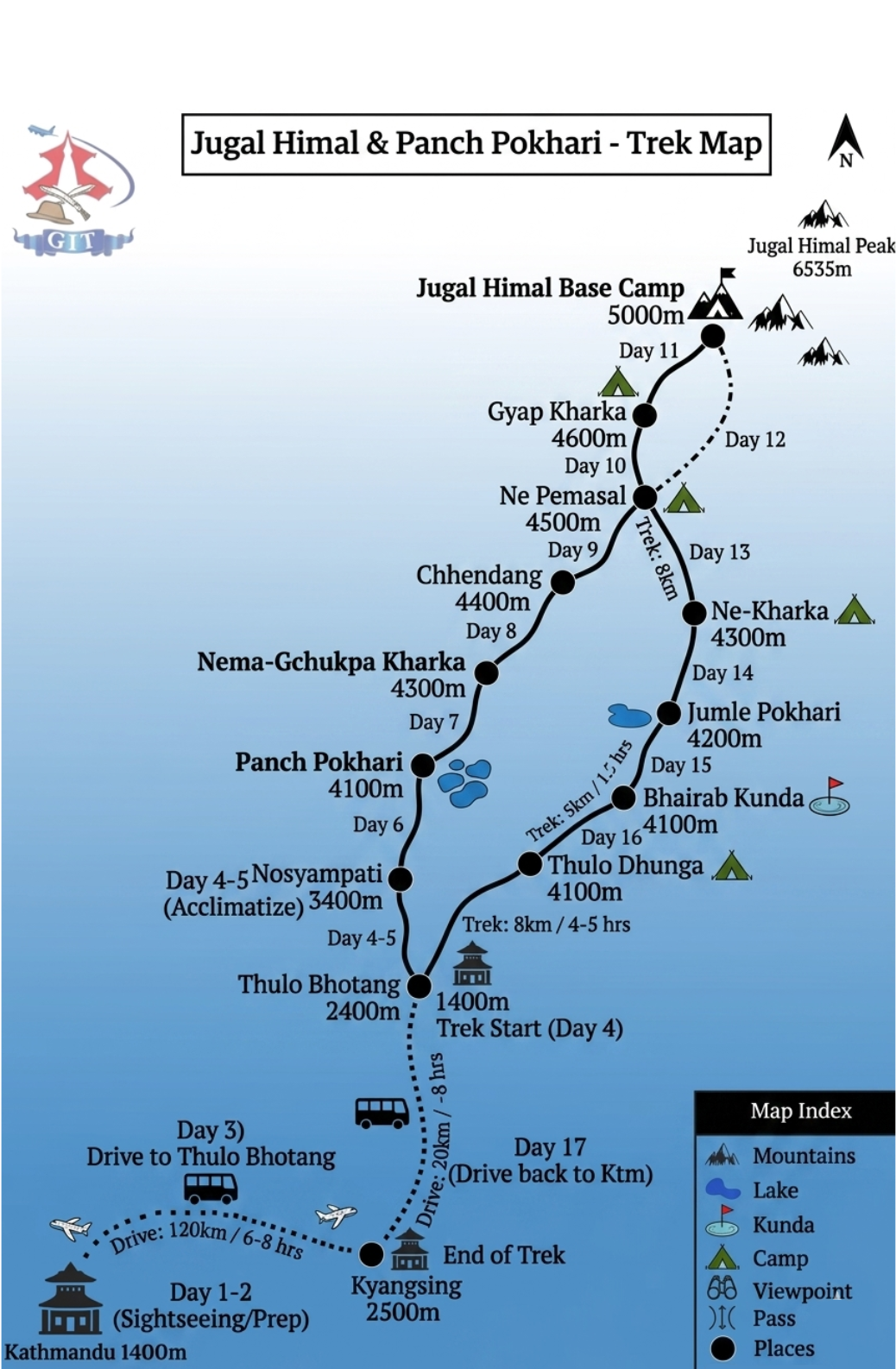 Itinerary
Upon your arrival in Kathmandu, you will be welcomed by our
representative and then taken to your hotel. The remaining part of the day will
be spent at leisure, since you have travelled. You could spend some time
walking around nearby areas like Thamel, a bustling tourist center, visit
trekking stores, restaurants, and local markets.
This day is devoted to sightseeing in Kathmandu Valley and
preparation for the trekking journey. You would be visiting some of the most
culturally significant places in Kathmandu Valley, such as Swayambhunath Stupa
(also called Monkey Temple), which is situated atop a hill offering a
spectacular view of the valley. And Boudhanath Stupa, which is one of the
largest Buddhist stupas in the world, along with a host of monasteries and
prayer wheels. Later in the evening, you will be briefed about the trekking
trip by your guide or tour consultant.
After your breakfast, you will drive towards Thulo Bhotang in
the region of Sindhupalchok. The route involves driving on twisting roads
through river valleys, terraced fields, and small settlements on the banks of
the Bhote Koshi River. As you go further out of the city, the environment will
become more serene, with views of green hills and mountain ranges in the
distance. Thulo Bhotang is a small Tamang village characterized by simplicity
and natural beauty.
Today marks the beginning of your trekking adventure as you
explore higher altitude regions. Your hiking path will be characterized by
gentle uphill movements through rhododendrons and pine forests. You may find
shepherd camps along the way, as well as some open spaces that characterize the
alpine zone. As you ascend to higher altitudes, the temperature becomes cooler,
and you will enjoy panoramic views of snow-covered mountains within the Jugal
Himal region. Your path will remain serene and wild, providing an authentic
trekking experience. In the evening, you will arrive at Nosyampati, which
serves as a base camp for those bound for Jugal Base Camp.
This day is dedicated to acclimatization so that your body
gets accustomed to the new altitude conditions. It will be spent either resting
in camp or walking around the nearby ridges to have an elevated view and
gradually adapt to the increased altitude. From the surrounding hills, one can
enjoy breathtaking views of the Jugal Himal massif, valley depths, and
unexplored alpine landscapes.
Today, the trail will take you towards the revered alpine lake
region of Panch Pokhari, which is one of the most spiritually important and
breathtaking places within the region of Jugal Himal. The journey takes you up
along the high ridges through the vast alpine area, providing you with
panoramic views of the snowy peaks and deep valleys. Towards Panch Pokhari, the
route gets rugged and windy with the occasional appearance of prayer flags
indicating sacred sites. The area of five sacred lakes amidst the desolate
highland landscape and the majestic peaks of the Himalayas creates a very
serene atmosphere. This place also serves as a site of pilgrimage for Hindus
and Buddhists alike.
As we continue our journey from Panch Pokhari, we venture into
a more remote part of the Jugal Himal mountain range. This day's trek route
includes walking through rugged high-altitude meadows with little vegetation,
where the only evidence of life is the seasonal grazing pastures. It is tough
walking, but very enjoyable with amazing scenic views all around us of faraway
snow-covered mountains and valleys. Along our trekking route today, we might
even find some settlements where herders move seasonally, practicing seasonal
migration. Nema-Gchukpa Kharka is an open grazing pasture that provides an
excellent spot for setting up camp.
This day takes us further into the high Himalayan terrain and
involves walking across rocky ridges and glaciers. The route is even more
adventurous as we climb higher; the landscape is devoid of vegetation, and
there are chances of facing windy areas and an alpine terrain. The surroundings
will get even more beautiful as we move forward, as snow-covered peaks come
into our view all the time. Chhendang is a high-altitude area and usually serves
as a halt point for trekkers and herders who travel through this route.
Today’s trek will take you deeper into the untamed wilderness
of Jugal Himal. This trek follows an incline through rocky moraines and glacier
formations, with the surroundings becoming progressively harsher and alpine.
There could be snow formations visible according to the season, and you can
feel the difference in the atmosphere. Although the trek is tough, the scenery
compensates for the difficulty with spectacular Himalayan mountains and valleys
opening up into the horizon. Ne Pemasal is a high-altitude camping site amidst
pristine natural surroundings.
The trek today will take you to Gyap Kharka, which is a large
plateau at a high altitude that serves as a grazing field situated in the upper
parts of the Jugal Himal range. The path winds along rocky trails and alpine
terrain, and there may be glimpses of glaciers and snow-capped mountain ranges
during this trek. This location serves as a campsite where people can venture
towards higher elevations within the Jugal Himal region and its surrounding
areas. It is completely secluded with no habitation whatsoever, thus making it
a prime location for trekking and backpacking.
Today marks the most exciting part of the entire trip as you
hike towards Jugal Himal Base Camp, nestled right in the middle of the Jugal
Himal mountain range. As you hike, the terrain gets tougher, passing through
rocky moraines, icy streams, and alpine regions. You will notice that your surroundings
start to change drastically, opening up the spectacular view of snow-capped
peaks, icy structures, and majestic Himalayas. As you continue hiking, you get
more and more isolated and feel like you are at a great altitude; however, what
makes all this worth it is being able to reach the base camp area, which is
surrounded by pristine and untouched nature.
After having the experience of base camp, you now start making
your way back by a route that takes you downhill through another valley and
that follows the stream flowing into the Ne Pemasal River. You can view a
completely different side of the terrain, with glaciers and rocky gorges, as
well as alpine meadows in your path. Your downhill trek is not strenuous,
although it is equally as remote as the upward one and gives you some stunning
views that you missed seeing while climbing up. By evening, you will arrive at
your old campsite area near Ne Pemasal.
The trek on this day involves descending into the high
altitude area around Ne Kharka. The surroundings start turning slightly green
with a gradual descent. This route takes you through vast areas of meadows
where yaks graze, valleys full of moraines, and some rocky peaks that offer
views of the Himalayas all around. The trekking pace becomes relatively easy,
as there are no steep climbs like before. Ne Kharka is used as a large grazing
area at a high altitude.
On this day, you will be trekking towards the stunning area of
high altitude lakes called Jumle Pokhari. This area features rolling alpine
terrain with open ridges. The trek passes through some picturesque locations
where reflections of the surrounding mountain ranges can be seen in the form of
small glacial lakes. The vegetation becomes slightly dense and includes alpine
grass and flowers during certain times of the year. Jumle Pokhari is an area
where few people visit, making it a serene place for camping beside the lakes.
The hike today will take you to Bhairab Kunda, an important
high-altitude lake situated in the eastern part of the Jugal Himal. This
journey involves climbing through ridges until finally reaching the basin of
the glacial lake. Bhairab Kunda has great religious importance to Hindu
pilgrims, and this scenic area is surrounded by majestic mountains, cliffs, and
colorful prayer flags. The crystal clear blue waters of Bhairab Kunda provide a
stunning contrast against the rough terrain of the highlands. This site is
undoubtedly one of the best locations that the trekkers visit during their
adventure.
In today’s adventure, you start descending from the alpine
highlands to reach Thulo Dhunga. The hiking trail shifts from the vicinity of
the glacial lakes and the alpine highlands to more stabilized surroundings. You
hike through rocky ridges, yaks grazing spots, and valleys that become
increasingly vegetated due to decreased altitude. As you move along the route,
you continue enjoying the magnificent views offered by the Jugal Himal peaks
around you. The location of Thulo Dhunga provides a natural halt for camping
amidst the surrounding hilly landscape.
For the last trekking day, you keep on moving down to reach
Kyangsing village, thus departing from the high altitude Himalayan environment.
Hiking becomes easier due to the green surroundings, passing by forests, hills,
little farming lands, and villages that will offer you more comfort after being
in higher altitudes. Kyangsing village is a perfect example of what you would
expect in the Himalayan region, as the village has its stone buildings,
terraced fields, and warm hospitality. After your arrival in Kyangsing, you
will leave the village and drive back to Kathmandu.
After breakfast, you will be taken to Tribhuvan International
Airport for your flight back. The Jugal Himal Base Camp Trek concludes, leaving
you with fond memories of pristine alpine terrain, religious lakes, high
Himalayan passes, and mountain villages steeped in culture. You will experience
a unique blend of adventure, spiritual discovery, and unspoiled nature in an
underexplored area of Nepal.
Cost Include
Cost Exclude
gallery and videos
Additional Information
The Jugal Himal Base Camp Trek involves traveling between 80 and 140 kilometers in total distance, depending on the chosen trail and extra side visits during the trip. The journey goes across remote villages, thick forests, valleys with rivers, alpine grazing grounds, and high mountain environments of Sindhupalchok District in Nepal. Trekkers hike for about 16 to 18 days, covering 5 to 7 kilometers every day on average. Despite the fact that the distance seems reasonable for each day, the trails require constant climbing and descending up and down, which increases the physical exertion on hikers. The trail remains one of the least explored among Nepal's trekking routes; the terrain tends to feature numerous wild segments and few settlements. This trekking destination has been popular among adventure seekers willing to explore something unusual, but near Kathmandu.
The altitude of Jugal Himal Base Camp Trek is definitely one of the major attractions of the trekking expedition. The altitude of the trek depends on the chosen path; however, most trekkers will reach altitudes ranging from 4,100 meters to 4,700 meters above sea level. In the course of ascending, the landscape around the trekkers transforms from lush green valleys to rugged alpine mountains, glaciers, and snow-capped peaks. The higher portions of the trek offer spectacular views of the Himalayas and create an authentic Himalayan environment. Due to the high altitude, acclimatization is essential on this trek, so trekkers should include a buffer day.
Jugal Himal Base Camp Trek is regarded as a moderate to challenging trek that requires good physical fitness as well as trekking experience from the participants. The trail does not involve any technical aspects of climbing; however, due to factors such as high altitude, rugged paths, and long, strenuous hiking hours, the trek can be quite difficult. Parts of the trekking route are isolated and lack basic development, so it involves camping with basic necessities. Nevertheless, with proper preparation, trekkers can undertake the challenge.
The perfect period for undertaking the Jugal Himal Base Camp Trek is spring and fall in Nepal. During these times, trekkers get clear skies and better weather compared to the rainy monsoon or the cold winter season. Since the route covers high altitudes and remote locations, selecting the appropriate time of year can make the whole experience much more comfortable for the trekkers. If you are planning your first trek ever or are looking for a challenge in the wilderness, spring and fall should be your preferred choices.
Spring season (March to May): It is undoubtedly one of the best seasons to travel to Jugal Himal Base Camp due to its scenic beauty and favorable weather conditions. During this time, average temperatures in low altitudes lie between 10°C and 20°C, whereas higher altitudes of the base camp lie in a temperature range of 0°C to - 8°C. Hills and forests are filled with the colors of flowering rhododendron trees and wild flowers, adding to the scenic beauty of the entire journey. Weather conditions are usually calm, and clear days provide an opportunity to see the magnificent Himalayas and their stunning glaciers covered in snow. This makes spring an ideal season for travelers who love nature and photography.
Autumn (September to November): The autumn season, which extends from September to November, is one of the best seasons for undertaking the Jugal Himal Base Camp Trek. As soon as the rains come to an end, the air becomes fresh and pure, resulting in extremely clear views of the Himalayas. In general, temperatures are quite comfortable and vary between 12°C and 18°C in the daytime and below freezing at night. Moreover, the trekking route does not pose many difficulties since the trails are dry. The beauty of the autumn season consists of seeing the golden landscapes, blue rivers, and mountain ranges every day. It is also interesting to note that autumn is a season of celebration in Nepal, which features major Nepalese festivals such as Dashain and Tihar.
Jugal Himal Base Camp Trek provides trekkers with a remote Himalayan adventure where food, accommodation, and camping become significant components of the trek. In contrast to other popular trekking routes in Nepal, the Jugal Himal Base Camp Trek is relatively undeveloped. Trekkers have access to basic homestays and lodges during the initial portions of the trek; however, camping is necessary when trekking at high altitudes. The meals that trekking participants will have during their trek will be basic but freshly cooked by the trekking team using locally available ingredients. Camping in such a location will make the trekking experience adventurous as trekkers camp among the pristine environment that includes mountains, rivers, meadows, and glaciers.
The food served on the Jugal Himal Base Camp Trek is fairly basic and nutritious, which ensures that there is sufficient energy to hike throughout the day in the mountains. In low-lying villages, trekkers can indulge in typical Nepalese foods, including dal bhat, noodles, rice, fresh vegetables, potatoes, soups, chapati, tea, and other local delicacies. As you move further up, food is usually prepared by our team members, ensuring hygiene and safety.
Accommodation varies between the locally available homestays in low-level villages and camping tents in high altitudes where there are no settlements. In the beginning phases of the trek, trekkers will find themselves accommodated in village homes or small lodges that are mostly multi-occupied by trekkers. These kinds of accommodations give trekkers a chance to experience the unique culture of the locals. The higher the trek goes, the fewer lodges you can find because these places are located in isolated high altitudes.
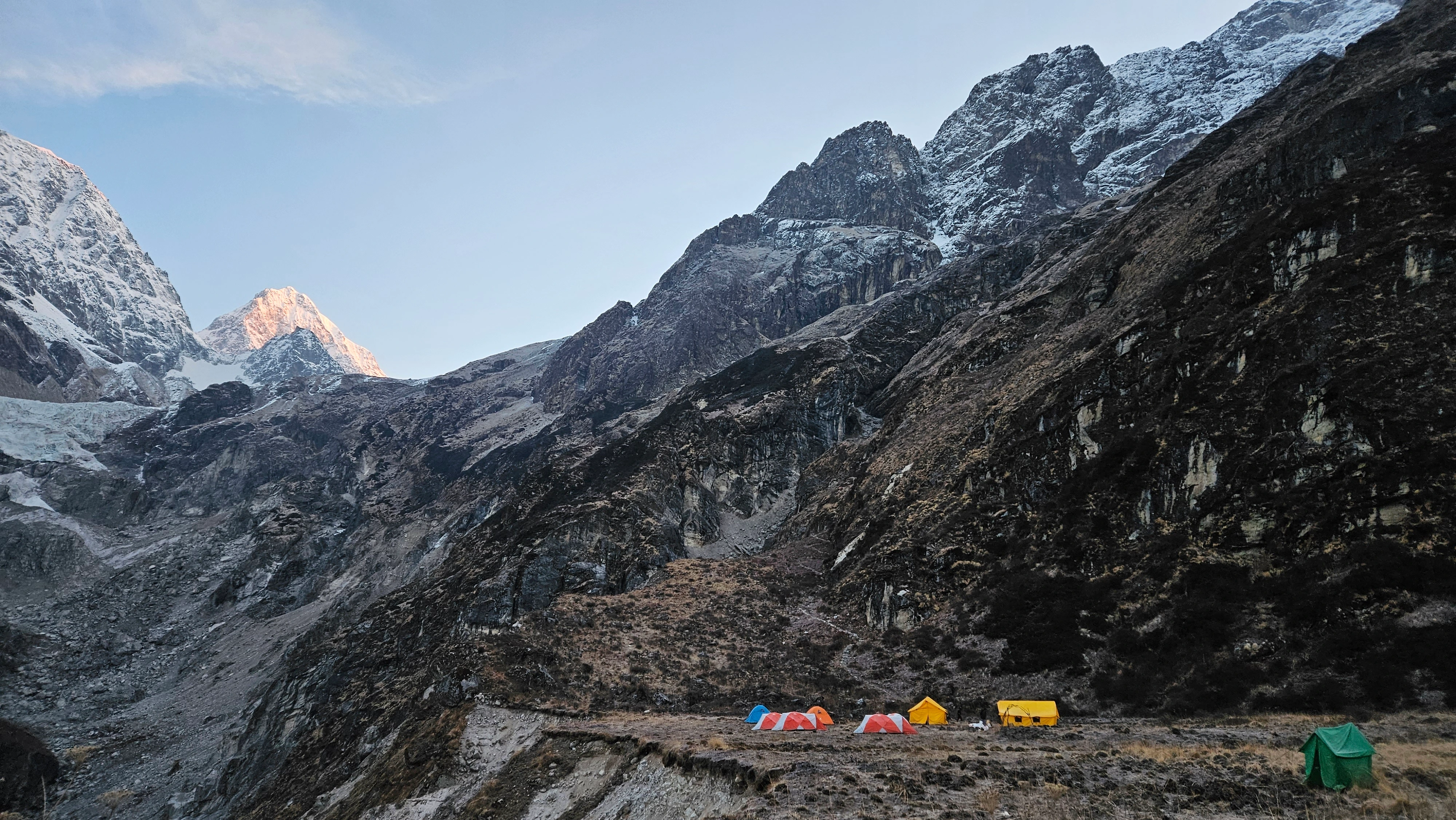
Camp activities make up one of the most thrilling parts of the journey because camping sites include river sides, yak grazing grounds, alpine grasslands, glacier valleys, and snowcapped peaks. The camping includes tents, sleeping bags, dining tents, cooking tents, and a crew that handles camping activities and meals. Although camping may be challenging because of the lack of comforts in camping sites, you will get an opportunity to fully immerse yourself in nature and enjoy the quiet mountain environment away from crowded tourist destinations. At high altitude campsites, the weather may turn chilly; hence, sleeping bags and trekking gear are important. Enjoying sunrise views over the Himalayan range from the mountains' campsites is one of the most thrilling moments of the tour.
The Jugal Himal Base Camp Trek takes place in an untouched area of Nepal’s eastern part, which means that trekking permits and assistance should be secured before the beginning of the trip. Due to the fact that the route involves high-altitude wild lands, traditional local settlements, and mountain territories that are partially restricted. It is necessary to strictly stick to trekking rules and travel using organized logistics. The level of tourism infrastructure in the Jugal Himal region is lower than in Nepal's other areas that are popular for trekking. Therefore, trekking permits and assistance are very helpful in ensuring that a traveler's experience will be safe, smooth, and trouble-free. In most cases, people who are going on treks arrange transportation, camping equipment, and logistics assistance before leaving for the Jugal Himal region by contacting trekking agencies registered in Nepal.
Permits: Before embarking on the Jugal Himal Base Camp Trek, trekkers must obtain a number of permits prior to their entry into the region. While the permits might change slightly depending on the trekking route chosen, the majority of trekkers will need to have a TIMS card and a conservation area permit. With sections of the Jugal Himal lying near the borders of Nepal and Tibet, certain routes will need special permits depending on where the trekking takes place within the region. This is important not only in facilitating controlled tourism but also for helping with conservation and safety measures. Fortunately, we will organize all necessary permits from Kathmandu prior to trekking. Trekkers are advised to carry passports or photocopies of their permits at all times during the trip, as there are various checkpoints in villages that can pop up anywhere along the route.
Guide Requirements: Hiring a guide for the Jugal Himal Base Camp Trek is highly recommended due to the remote nature of the trail and the limited trekking infrastructure in the region. Unlike popular trekking areas with clearly marked routes and many lodges, the Jugal Himal trail passes through isolated forests, mountain passes, and camping sections where navigation can become difficult, especially during bad weather. Experienced local guides provide valuable support by handling route finding, communication with local communities, campsite management, and overall trekking safety. Guides also help trekkers understand local culture, traditions, and mountain lifestyles along the journey. Many trekking groups also hire porters to carry camping equipment and heavy bags, which makes the trek more comfortable at high altitude. Choosing a license is considered the safest and most reliable option for completing the trek successfully.
The Jugal Himal Base Camp Trek is an adventurous trip to the Himalayas that demands sufficient physical conditioning, effective acclimatization, and proper planning prior to embarking on the high altitude area. As the trek will be conducted at altitudes of more than 4,500 meters and will cover some distance each day, trekkers must mentally and physically prepare themselves for the tour. In contrast to easy trekking trails within Nepal, the Jugal Himal trek involves a lot of climbing, camping in secluded areas, and a lack of facilities. This makes preparation more essential because with adequate preparation and moderate trekking speed, travelers will be able to explore the pristine environment, glaciated valleys, alpine landscape, and tranquil mountain atmosphere that characterize the trek.
Physical Fitness: It is essential to be in excellent physical condition in order to undertake the Jugal Himal Base Camp Trek easily and efficiently. The trek requires participants to walk for 5 to 7 hours daily through rugged terrains characterized by steep hill ranges, rough footpaths, dense forests, and high-altitude regions. Though the trek does not involve any technical climbs, it needs one to have excellent stamina and endurance since there will always be constant up and down movements and long walks on a daily basis. It is important to prepare in advance for the trek by engaging in activities such as jogging, hiking, running, biking, cardio exercises, and leg muscle training. We also suggest that you walk regularly while carrying a bag prior to departure, as it will be beneficial.
Altitude Sickness: One of the biggest hurdles that will be encountered on the Jugal Himal Base Camp Trek will be altitude sickness, which is unavoidable due to the high altitudes that the trail will traverse, starting from about 4,000 meters. As the elevation rises, some people could suffer from altitude sickness, such as headaches, dizziness, nausea, fatigue, lack of appetite, or shortness of breath. To minimize the possibility of suffering from AMS, the process of acclimatization must be strictly followed throughout the journey. It is recommended that travelers get plenty of water, avoid drinking alcohol, eat nutritious food, and keep up a moderate pace when walking.
The Jugal Himal Base Camp Trek is more than just an expedition of exploring rugged mountain trails and extreme altitudes. It is also a cultural experience of discovering the rich culture and heritage of the Himalayan peoples inhabiting the area along the route. Along the way, trekkers are introduced to a fascinating fusion of Hinduism and Buddhism cultures developed for many years within the rugged mountains. The trail takes one through serene settlements where the inhabitants still live in their indigenous ways, cultivate their lands, and practice religious beliefs that are strongly linked with nature. Historical shrines, sacred lakes, and monasteries enrich the cultural experiences of trekkers.
Another notable cultural stop in the Jugal Himal range is Panch Pokhari, which is basically "five lakes." This revered location sits at an elevation of about 4,100 meters above sea level. For Hindus and Buddhists, it carries substantial spiritual importance, particularly during the Janai Purnima festival, where believers pay homage and engage in religious rituals at the lakes. In the local tradition, it is believed that the lakes are associated with Lord Shiva, making it a prominent pilgrimage destination. The landscape around Panch Pokhari consists of alpine grasslands, hills, and breathtaking Himalayas. Trekking through Panch Pokhari provides trekkers with an intense feeling of peace and serenity, and they may feel more connected with nature as it tends to be relatively secluded. Unlike other religious trekking locations in Nepal, Panch Pokhari does not attract many visitors, which adds to its charm.
The Jugal Himal Base Camp Trek involves hiking in an isolated area of the Himalayas, where the weather is likely to change suddenly, and facilities are extremely primitive. The reason why you should pack all necessary equipment for this particular hike is that it involves trekking through high altitude, alpine forest, river, and glaciers. Packing correctly will keep you warm at night and comfortable during the day, considering that you will be spending lots of time walking and encountering various weather conditions in the mountains. In contrast with commercial trekking trails in Nepal, this route does not provide any shopping facilities; therefore, you should plan carefully what equipment you are going to take.
Head
Warm beanie (wool/ fleece)
Sun cap/ baseball cap
Buff/ neck gaiter
Balaclava (optional but useful)
Headlamp with extra batteries
Sunglasses (UV 400 protection, polarized preferred)
Upper Body
Moisture-wicking t-shirts (synthetic or merino wool)
Thermal tops (lightweight & midweight)
Fleece jacket (light or midweight)
Lightweight insulated jacket (optional but helpful)
Waterproof & windproof jacket (Gore-Tex or equivalent)
Rain jacket with hood (must be reliable, not just water-resistant)
Down jacket
Lightweight casual shirt (for teahouse evenings)
Gloves (thin liner gloves & warm insulated gloves)
Lower Body
Trekking pants (quick-dry, breathable)
Insulated pants (for cold evenings/ high altitude)
Waterproof shell pants (important during rain/ snow)
Thermal leggings (base layer for cold nights)
Comfortable lounge pants (for teahouse/ rest)
Feet
Socks (wool recommended)
Thick thermal socks (for sleeping/ cold nights)
Liner socks (prevent blisters)
Waterproof trekking boots (well broken-in, ankle support)
Lightweight camp shoes/ sandals (for evenings in the teahouse)
Blister patches (Compeed or similar)
Foot powder (prevents sweating/ fungal issues)
Gaiters (useful in mud, snow, or loose gravel)
Accessories
Trekking backpack (30- 50L for daily use)
Duffel bag (60- 100L carried via porter)
Trekking poles (highly recommended for steep trails)
Reusable water bottles or hydration bladders
Water purification tablets/ filter bottle
Dry bags or rain covers (for electronics & clothes)
Lightweight towel (quick dry)
Toiletry kit (toothbrush, toothpaste, soap, wipes, etc.)
Sunscreen with 50+ SPF
Lip balm with SPF
Hand sanitizer & wet wipes
Extras
First aid kit (bandages, antiseptic, painkillers)
Diamox (for altitude sickness, but consult a doctor)
Electrolyte powder
Personal prescription medicines (if any)
Blister care kit
Power bank (10,000–20,000 mAh)
Charging cables + universal adapter
Camera (optional)
Extra memory cards
Solar charger (optional for remote areas)
Snacks (energy bars, nuts, chocolate, dried fruit)
Lightweight book or Kindle
Journal & pen
Earplugs
Sleeping bag (rated -10°C to -15°C recommended)
Optional But Highly Useful
GPS offline map app
Trekking permit copies
Small notebook for notes
Lightweight trekking umbrella (rain & sun protection)
freqeuntly asked question
enquiry for further inforamtion
package reviews and rating
write reviews
 Group Join Discount
| Nos Of Persons | price per person |
|---|
upcomming fixed departure
| Trip | Departure Date | Price | Trip Status | Action |
|---|
UpComming Fixed Departure
offered features

Selling Expedition
showing varified reviews